Written by
Zoom Drain Phoenix Team
Published on
August 10, 2026

Tree roots are one of the most common causes of sewer line problems in established neighborhoods, and they are also one of the easiest to miss until the damage is already significant. Roots do not announce themselves the way a burst pipe does. Instead, they grow slowly into small cracks or loose joints, drawn in by the constant moisture inside the line, and the symptoms build gradually over weeks or months rather than showing up all at once.
This guide walks through the five clearest signs that roots may already be inside your sewer line, why Phoenix yards are particularly prone to this problem, and what fixing it actually involves. If you are noticing any of these signs, call Zoom Drain Phoenix at (602) 613 1114 or book a camera inspection online.
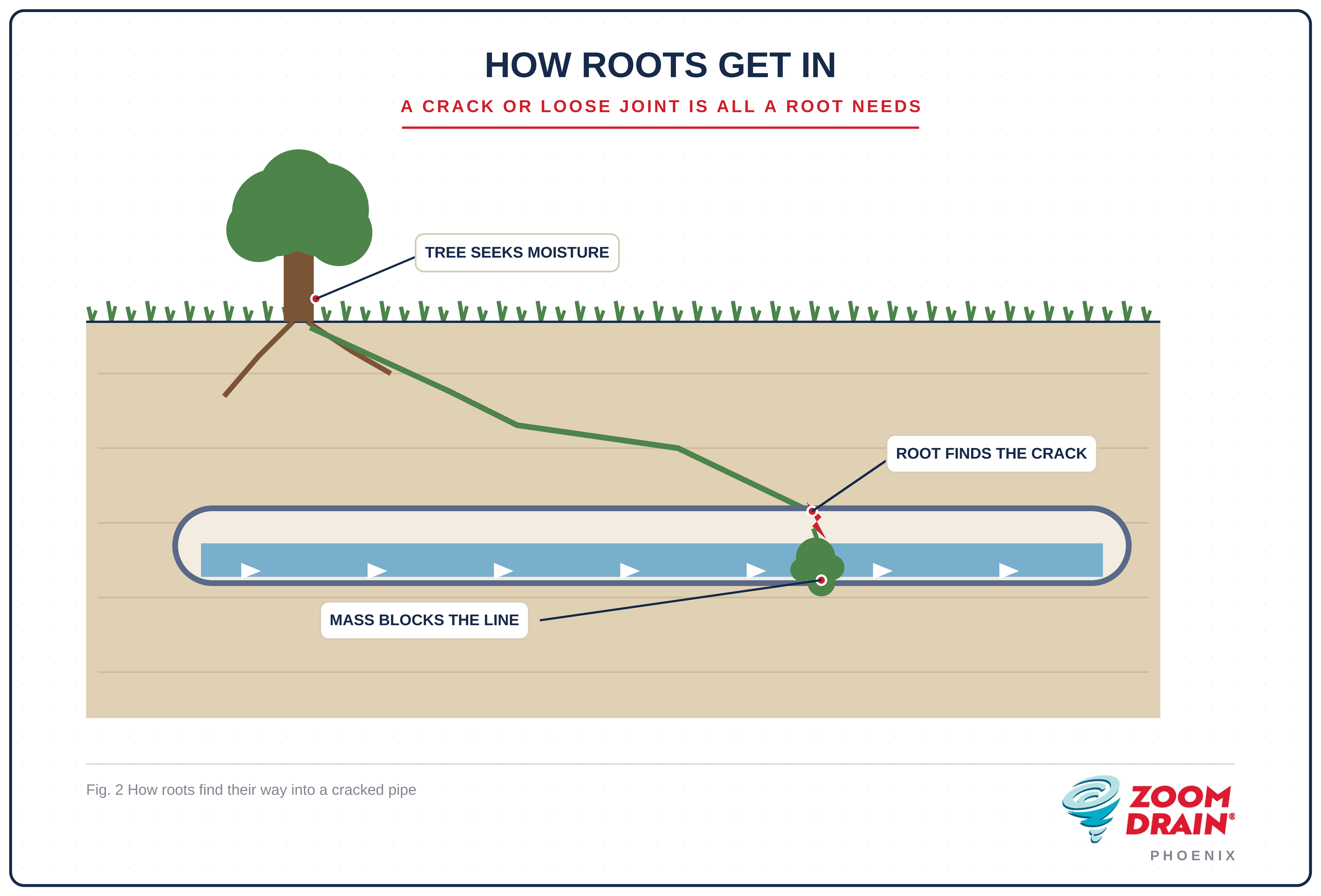
Tree roots are relentless in their search for water, and a sewer line full of running water is an obvious target. Even a hairline crack, a loosened joint, or a small gap where a pipe has shifted is enough of an opening for a root to find its way in. Once inside, the root does not stop growing. It thickens over time, spreading into a dense mass that can partially or completely block the line while also widening the original crack, which makes the pipe more vulnerable to further intrusion and damage.
Older pipe materials, particularly clay and cast iron, are especially susceptible, since their joints were never sealed as tightly as modern pipe and they naturally develop small cracks and shifts as the ground moves over decades.
Modern PEX and properly sealed PVC lines are far more resistant to this kind of intrusion, since they have far fewer joints and no natural seams for a root to exploit. That is part of why root problems tend to cluster heavily in older homes with original clay or cast iron laterals rather than newer construction, and it is one more reason a repipe or lateral replacement can pay off over time for a home that keeps experiencing recurring root issues.
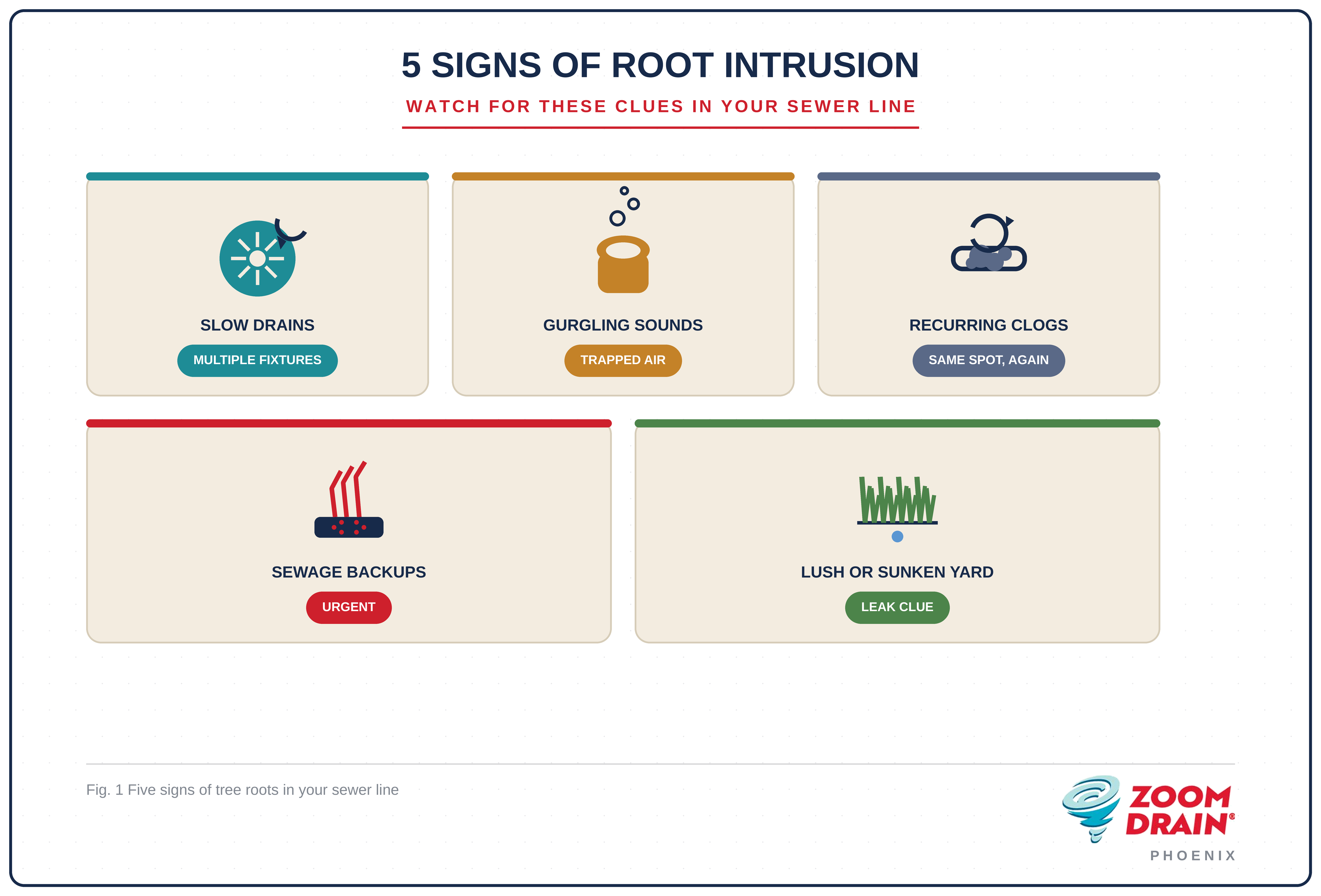
A single slow drain is often just a localized clog. But when multiple fixtures across the home, a bathroom sink, a shower, and a toilet, all start draining slowly around the same time, that points toward a shared blockage further down the line, and root intrusion is one of the most common causes of that kind of system wide slowdown.
Gurgling happens when air is trapped and forced back through the plumbing system because its normal path is partially blocked. If you notice your toilet gurgling when you run the washing machine, or a drain bubbling when another fixture is used, that trapped air is a sign something, often roots, is restricting flow in the shared line.
A clog that clears with a plunger or a store bought drain product and then returns within days or weeks is a strong sign of a deeper obstruction rather than a simple surface level blockage. Roots inside the line create a mesh that catches waste and paper repeatedly, so the clog keeps rebuilding at the same spot no matter how many times it is cleared from the surface.
When roots have significantly blocked a sewer line, wastewater has nowhere to go and can back up into the lowest drains in the home, often a floor drain, a tub, or a basement fixture, particularly when a toilet is flushed or a washing machine drains. This is one of the more urgent signs on this list and usually means the blockage has progressed well beyond an early stage issue.
A patch of grass that looks noticeably greener and healthier than the rest of the lawn, especially one that follows the path between the house and the street, can mean a cracked section of sewer line is leaking small amounts of wastewater that is fertilizing the ground above it. Soft, spongy, or slightly sunken areas along that same path point toward soil that has been eroded by a more significant leak, and in advanced cases can develop into a visible sinkhole.
Phoenix's dry climate actually makes root intrusion more aggressive rather than less. With little natural moisture available in the surrounding soil for much of the year, tree roots are drawn even more forcefully toward the reliable, constant moisture inside a sewer line, and drought conditions have been linked to increased root related sewer problems across the country for exactly this reason. Combine that with mature trees common in older Phoenix neighborhoods, mesquite, ficus, and other large rooted species planted decades ago near original clay or cast iron sewer laterals, and it becomes clear why local plumbers see root intrusion as one of the most common sewer line issues in the Valley.
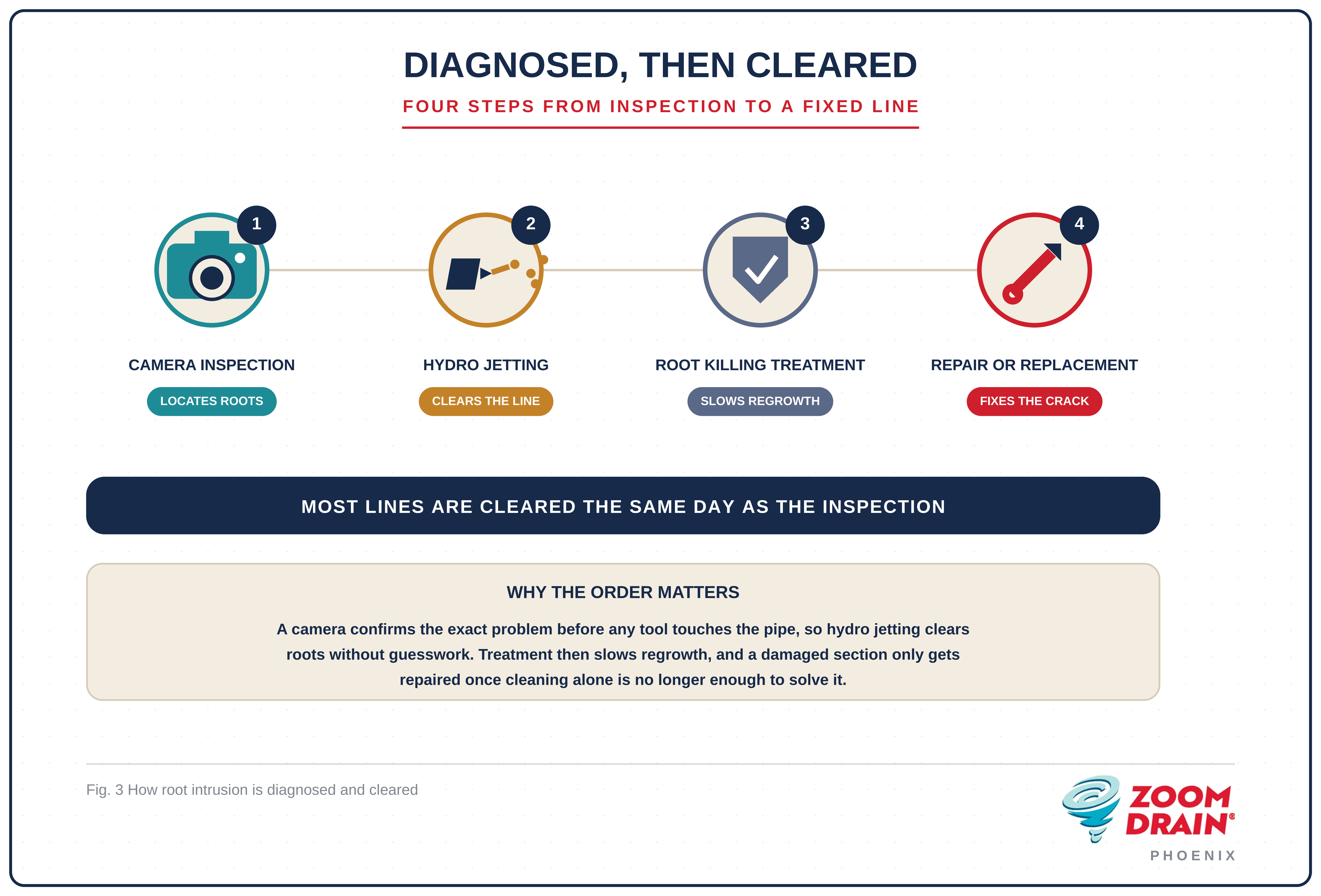
The first step is always a camera inspection, which lets a technician see the exact location and severity of root intrusion inside the line rather than guessing based on symptoms alone. From there, the right fix depends on how extensive the damage is.
For moderate intrusion, hydro jetting is often the most effective solution. A specialized nozzle sends high pressure water, typically in the range of 1,500 to 4,000 PSI, through the line in multiple directions, cutting roots into small pieces while also scouring builtup debris off the pipe walls. A root killing treatment applied afterward coats the interior of the pipe and helps prevent regrowth for a year or more, since the tree will otherwise continue seeking the same water source it already found once.
For pipe that has been significantly cracked or structurally compromised by root growth, cleaning the line addresses the immediate blockage but does not fix the underlying damage, and a repair or replacement of the affected section becomes the longer term solution.
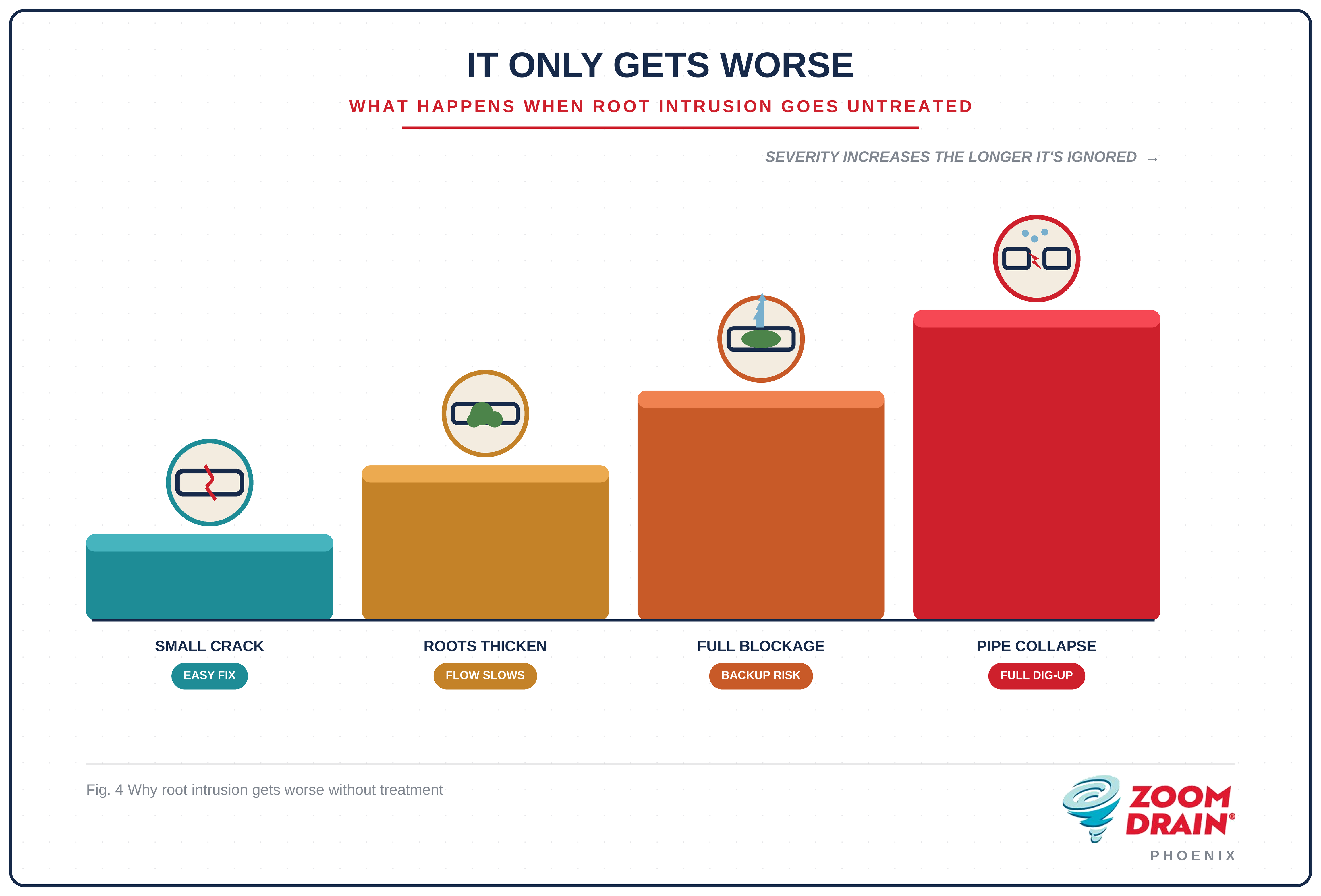
Left unaddressed, root intrusion does not stay the same size. Roots continue thickening inside the line, gradually restricting flow further until a full blockage or a backup into the home occurs, often at an inconvenient time rather than a planned one. The original crack that let roots in also tends to widen under the pressure of continued root growth, which can eventually lead to a collapsed section of pipe that requires full excavation and replacement rather than a routine cleaning. Addressing the problem early, at the first sign of slow drains or gurgling, is almost always less disruptive and less expensive than waiting until a backup forces the issue.
A sewage backup inside the home also brings cleanup and water damage costs on top of the plumbing repair itself, which is a large part of why a proactive camera inspection is worth scheduling the moment you notice any of the five signs above rather than waiting to see if the problem resolves on its own.
Root intrusion is a problem that is easy to underestimate until it becomes a backup in your home. Zoom Drain Phoenix technicians carry camera inspection equipment on every truck, so we can confirm exactly what is happening inside your line and recommend the right fix, whether that is hydro jetting, a root killing treatment, or a repair, on the same visit. Every job comes with upfront flat rate pricing before any work begins, and same day appointments are available across the Phoenix metro for problems that cannot wait.
Can I kill the roots without removing the tree?
Yes. Hydro jetting combined with a root killing treatment addresses the roots inside the pipe without requiring the tree itself to be removed, though the tree will typically attempt to regrow into the same crack over time, which is why periodic maintenance or a permanent pipe repair is often recommended for a long term fix.
How often do roots come back after hydro jetting?
Without a root killing treatment or a permanent pipe repair, roots often regrow within months, since the underlying crack that let them in is still there and the tree is still seeking that water source. With treatment, most homeowners can expect a year or more before roots become a problem again.
Is hydro jetting safe for older pipes?
Hydro jetting is generally safe for most pipe materials, but a camera inspection beforehand is important for older or already fragile clay and cast iron pipe, since a technician needs to confirm the line can handle the water pressure before proceeding.
How much does it typically cost to clear tree roots from a sewer line?
Hydro jetting for root removal typically falls in the range of a few hundred dollars for straightforward cases, with cost increasing based on the length of the line and severity of the intrusion. A camera inspection and upfront quote gives you an accurate number before any work begins.
Should I remove a tree that keeps causing root problems?
Removing the tree eliminates that specific source of roots, but any remaining roots already in the ground can continue growing for some time afterward, and other nearby trees or shrubs may eventually find the same crack. A permanent pipe repair alongside tree removal is often the most reliable long term solution if root intrusion keeps recurring.
If your drains are running slow, gurgling, or backing up, roots may already be affecting your sewer line. Zoom Drain Phoenix can confirm the cause with a camera inspection and clear it the same day in most cases. Call us today at (602) 613 1114 or book online for fast, flat rate service across the Phoenix metro.