How to Snake a Drain Yourself: A Step by Step Guide
Snaking a drain yourself is a cost effective way to clear minor sink, tub, and toilet clogs without harsh chemicals. Using a manual or closet auger, you can feed a flexible cable into the pipe and rotate clockwise to break up soft blockages. However, if multiple fixtures back up, a snake hits hard resistance, or clogs keep returning, the problem is deeper in your main line. Contact Zoom Drain Phoenix at (602) 613-1114 for professional camera diagnostics and expert sewer service.
A slow or clogged drain does not always require a plumber. In many cases, a simple tool called a drain snake can clear it in about fifteen minutes, with no chemicals and no service call required. This guide walks you through the entire process, from choosing the right tool to recognizing the moment a clog needs more than a DIY fix. If you would rather skip straight to professional help, Zoom Drain is one call away at (602) 613 1114.
Signs You Have a Clog a Snake Can Fix
Not every drain problem calls for a snake. Here is how to tell if this is the right fix.
Water drains slowly instead of stopping completely
You hear gurgling from the drain or a nearby fixture
Standing water builds up in a sink, tub, or shower
Only one drain is affected, not the whole house
A plunger helped a little, but the clog came back
If your symptoms match these, snaking is worth trying before you call anyone. If water is backing up in more than one place at once, skip ahead to the section on when to call a professional.
Types of Drain Snakes
Not all snakes are built the same. Using the right one saves time and protects your pipes.
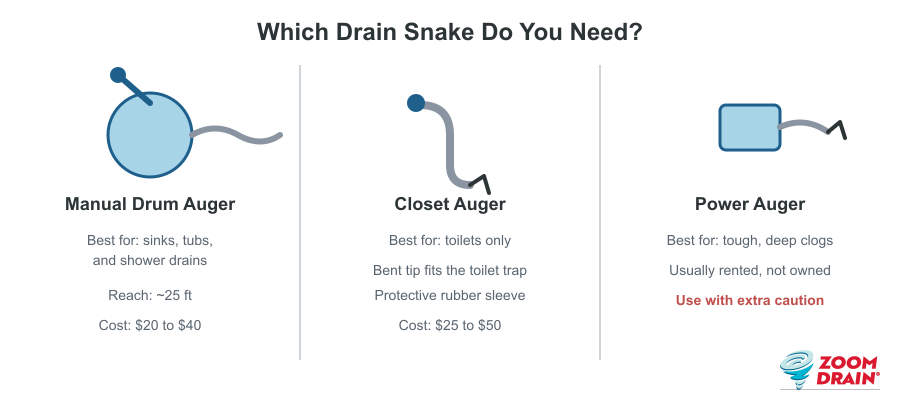
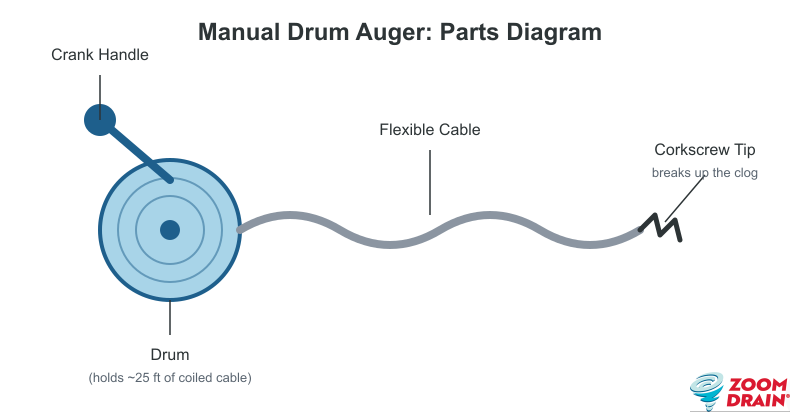
Manual drum auger. The standard homeowner tool. A hand crank feeds a flexible cable, usually 25 feet long, into sinks, tubs, and shower drains. It costs around $20 to $40 at any hardware store.
Closet auger. Built specifically for toilets. It has a bent tip that follows the curve of the toilet's trap and a rubber sleeve that protects the porcelain from scratches. Do not use a standard drum auger in a toilet, since the bend is wrong and it can crack the bowl.
Power auger. A motorized version built for tougher, deeper clogs. These are usually rented rather than owned, and they call for extra caution, since the added force can damage older or fragile pipes. These machines are also dangerous to use if mishandeled. The coils are under extreme tension and can risk breaking hands, fingers, and toilets/sinks if improperly used.
For most household clogs, a manual drum auger is all you need. If you are ever unsure which tool fits your situation, call Zoom Drain at (602) 613 1114 and we will help you figure it out before you spend a dollar.
Which Drain Snake do you need?
What You Will Need
Before you start, gather these items.
A drain snake, a drum auger for sinks and tubs, or a closet auger for toilets
Work gloves
Old towels or rags, to protect the floor and catch debris
A bucket, in case you remove the P trap
An adjustable wrench
A flashlight, to see into dark cabinet spaces
Safety glasses, optional but a good idea
Having everything ready before you start keeps the job quick and keeps you from searching for a wrench halfway through.
Snaking it yourself is a great first move, and it is worth trying before you spend money on anything else. But if you would rather skip the guesswork entirely, call Zoom Drain at (602) 613 1114. We send a licensed technician who already knows which tool the job needs and gets it right the first time.
Step by Step: How to Snake a Sink or Tub Drain
Clear the area. Empty the cabinet under the sink and lay towels on the floor. Spills happen, especially if you remove the P trap.
Remove the stopper or drain cover. Lift or unscrew the sink stopper. For a tub, remove the drain screen, or the overflow plate screws if your tub drains from there.
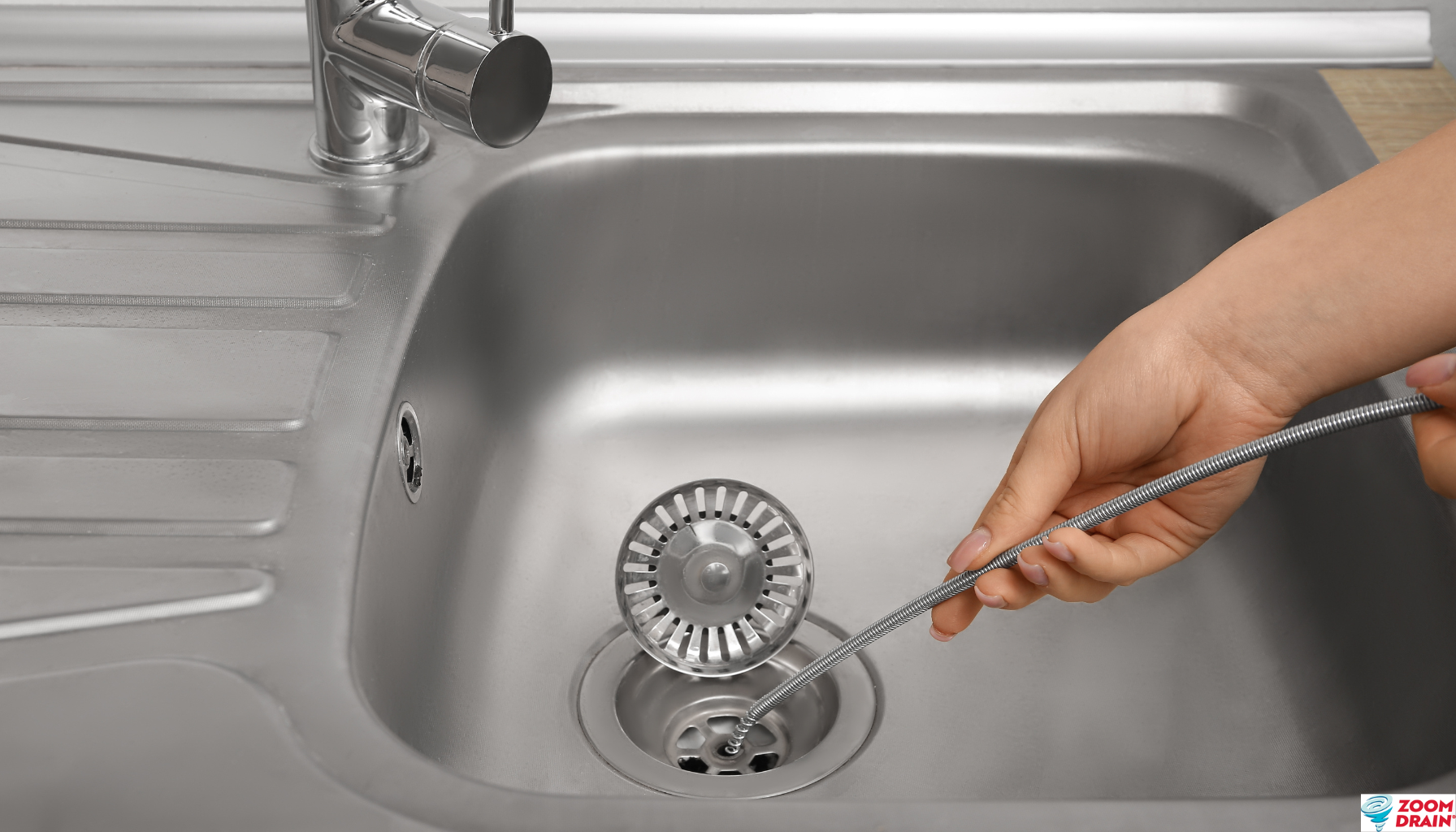
Feed the cable into the drain. Guide the end of the cable into the opening. Keep a few inches of slack near the crank so you have room to work.
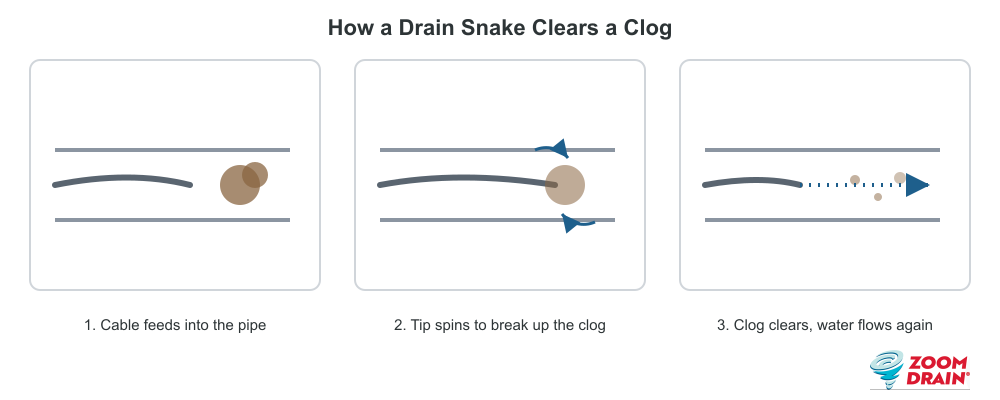
Turn the crank slowly, in a clockwise direction. Let the cable advance on its own as you turn. Do not force it forward. A snake works by spinning, not by being pushed.
Feel for resistance. A sudden stop in the cable's smooth movement usually means you have reached the clog.
Break through the clog. Keep cranking clockwise. This spins the tip of the cable, which either breaks the blockage apart or hooks onto it so you can pull it out.
Pull the cable back slowly, while continuing to crank. Continuing to turn as you retract keeps hair, grease, or debris caught on the tip instead of slipping back down the pipe.
Wipe the cable as it comes out. Keep a rag in hand to catch what comes off the cable so it does not end up back in the drain or on the floor.
Run hot water for two to three minutes. This flushes out anything the snake loosened but did not fully remove.
Repeat if the drain is still slow. A second pass is common and nothing to worry about.
Reassemble the drain. Reattach the stopper, drain screen, or overflow plate.
Test it. Run the water again and watch how it drains before you call the job done.
Snaking a Toilet
Toilets need a closet auger, not a standard drum auger, because of the bend inside the bowl.
Insert the auger's curved end into the drain opening at the bottom of the bowl.
Turn the crank clockwise to feed the cable around the bend and into the trap.
When you feel resistance, keep cranking to work through the clog.
Slowly pull the cable back out while you continue turning the crank.
Flush to test. If it drains normally, the clog is cleared.
Tips for a Smoother Job
Go slowly. Forcing the cable is the most common way people damage a pipe or bend an auger.
Never combine a snake with a chemical drain cleaner. Leftover chemicals can splash back and cause burns.
Keep a bucket under the P trap the moment you remove it. There is always standing water inside.
Clean and dry the cable fully after use before you store it, so it does not rust or seize up next time.
When to Stop and Call a Professional
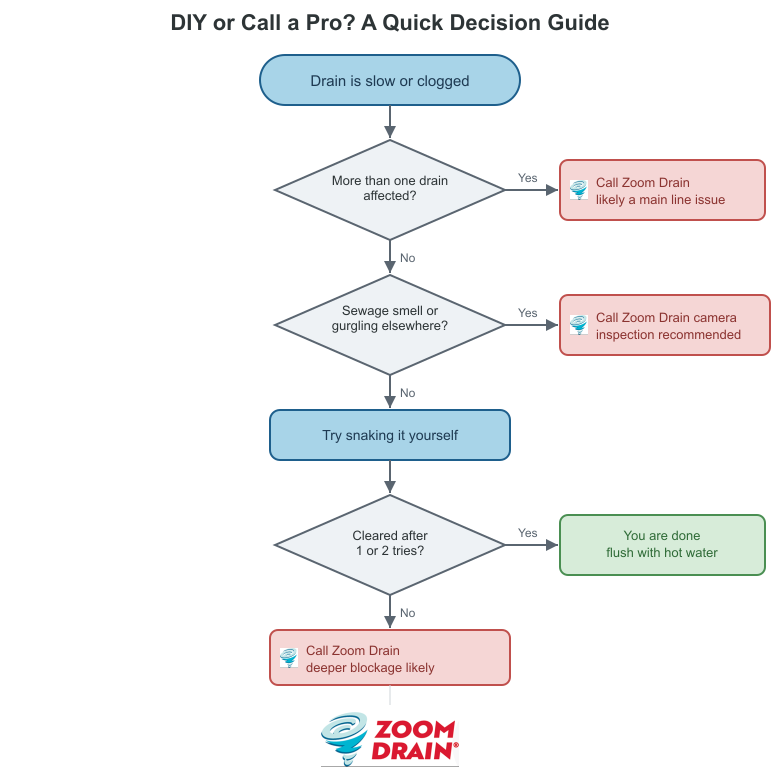
A snake solves a lot of clogs, but not all of them. These signs mean it is time to bring in a professional instead of snaking a third or fourth time.
The clog comes right back within a day or two
You hit something solid that will not budge, no matter how gently you crank
More than one drain backs up at the same time
You notice a sewage smell coming from the drain
The cable gets stuck and will not retract
Your home has older cast iron or galvanized pipes, where an aggressive snaking can turn a small crack into a bigger repair
None of these mean you did anything wrong. They usually mean the real problem is further down the line, past where a handheld snake can reach or diagnose.
DIY or call a Pro?. Call us at (602) 613 1114 and skip the trial and error
DIY gets you far, but it has a ceiling. A snake clears what it can reach and see, nothing more. When a clog keeps coming back, that ceiling is exactly what you have hit. Zoom Drain sends a licensed technician with camera inspection equipment to see precisely what is happening inside the pipe, instead of guessing, and fix the actual cause instead of just the symptom. Call us at (602) 613 1114 and skip the trial and error.
Frequently Asked Questions
How far can a drain snake reach?
A standard manual drum auger reaches about 25 feet, which covers most sink, tub, and shower clogs. Anything farther down, closer to the main line, usually needs a longer, motorized auger or a professional inspection.
Can a drain snake damage my pipes?
Used gently and correctly, a manual snake is safe for most modern pipes. Older, corroded, or cast iron pipes are more fragile, and forcing a snake through one can turn a minor issue into a real repair. If you are not sure what kind of pipe you have, it is worth asking before you snake it.
How often should I snake my drains?
There is no set schedule. Snake a drain when it is actually slow or clogged, not as routine upkeep. If the same drain needs it every few months, that is a pattern worth having looked at, not just a coincidence.
Is a drain snake the same thing as a plumber's snake?
Yes. Drain snake, plumber's snake, and auger all refer to the same type of tool. Sizes and strength vary, but the mechanics stay the same.
Final Thoughts
A drain snake is one of the cheapest, most useful tools you can keep under the sink, and it clears a surprising number of clogs without a service call. But it is not the fix for every clog. If you have snaked a drain twice and it is still coming back, or you are seeing any of the warning signs above, the smartest move is bringing in someone who can actually see what is happening inside the pipe.
Trying it yourself first is smart, and this guide will clear plenty of clogs on its own. But when a clog is stubborn, hidden, or keeps coming back, a licensed technician with the right equipment finds the answer faster and more reliably than a cable turned by hand. If you would rather have it done right the first time, call Zoom Drain at (602) 613 1114. We send licensed technicians with camera inspection equipment to find the real cause of stubborn clogs, not just clear them temporarily.