Written by
Zoom Drain Phoenix Team
Published on
August 10, 2026

.png)
A slow or fully blocked kitchen sink is one of the most common plumbing complaints in Phoenix area homes, and it almost always happens at the worst possible time, right in the middle of cleaning up after dinner or loading the dishwasher before guests arrive. The good news is that most kitchen sink clogs are caused by grease, food debris, and soap buildup sitting close to the drain opening, which means many of them can be cleared using items you probably already have under the sink or in the pantry. This guide walks through the most effective household methods for clearing a clogged kitchen sink, explains why these clogs form in the first place, and covers the warning signs that mean it is time to stop troubleshooting and call a professional.
Understanding what causes a clog makes it much easier to choose the right fix. Kitchen sink drains are narrower than most other drains in the house, and they deal with a steady stream of grease, oil, food particles, coffee grounds, and starchy residue from rice and pasta. Grease and cooking oil are the biggest culprits. They pour down the drain as a liquid but cool and solidify inside the pipe, creating a sticky coating that traps everything else that passes through afterward.
Food particles that slip past the strainer add to that buildup over time, and in homes with a garbage disposal, small bits of food that are not fully broken down can settle in the trap below the disposal unit. Hard water, common throughout the Phoenix Valley, also plays a role, since mineral deposits gradually narrow the inside of the pipe and give grease and debris more surface area to cling to. All of this tends to collect right around the P trap, the curved section of pipe under the sink, which is exactly why so many of the methods below focus on that area.
Boiling water is the simplest thing to try first, and it works surprisingly well on clogs caused by grease or soap buildup that has not fully hardened yet. Bring a full kettle or pot of water to a rolling boil, then carefully pour it directly down the drain in two or three stages, waiting several seconds between pours to let the hot water work on the buildup. The heat melts grease and softens soap scum enough for it to break loose and wash through. This method works best on newer, lighter clogs and is safe for most pipe materials, though it should be used with caution on older PVC connections, which can warp under extreme heat if the water is truly at a full boil.
This classic combination creates a fizzing chemical reaction that helps loosen grime clinging to the inside of the pipe. Start by removing any standing water from the sink if possible, then pour about one half cup of baking soda directly into the drain, followed immediately by one half cup of white vinegar. Cover the drain opening with a stopper or a damp cloth to keep the fizzing reaction contained within the pipe rather than escaping back up through the opening. Let it sit for fifteen to twenty minutes, then flush the drain with a full kettle of hot or boiling water to carry the loosened debris through the rest of the line. For a stubborn clog, this combination can be repeated a second time before moving on to a different method.
Dish soap is designed to cut through grease, which makes it an effective tool against the kind of buildup that causes most kitchen sink clogs. Squeeze a generous amount of dish soap, roughly a quarter cup, directly into the drain and let it sit for a few minutes so it can begin coating the walls of the pipe. Follow with a steady stream of very hot water poured slowly down the drain. The combination of soap and heat helps break the grease down into smaller pieces that can move through the pipe instead of sticking to the sides. This method pairs well with a plunger, since the soap also acts as a lubricant that helps the plunger create a better seal and move debris more freely.
Salt has a mildly abrasive quality that helps scrub away grease and grime clinging to the inside of the pipe. Combine about one half cup of table salt with one half cup of baking soda and pour the mixture down the drain. Let it sit for roughly ten minutes, then follow with hot water. The gritty texture of the salt works alongside the baking soda to loosen buildup, and the hot water flush carries everything the rest of the way through the line. This method works particularly well as a maintenance step even when the sink is not fully clogged, since it helps prevent buildup from accumulating in the first place.
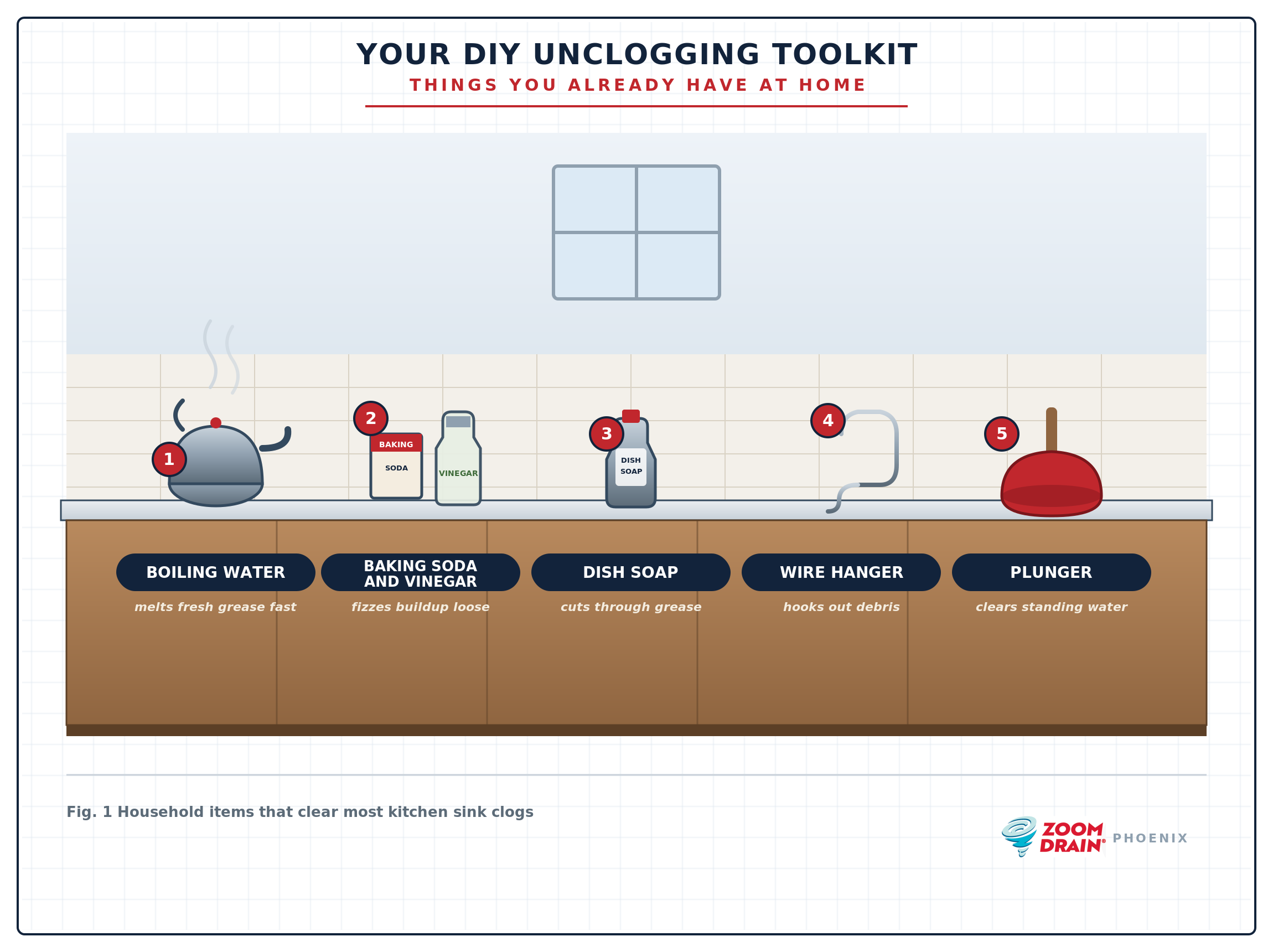
For clogs sitting close to the drain opening, a straightened wire coat hanger can work almost as well as a store bought drain snake. Unwind a wire hanger and straighten it out, then bend one end into a small hook. Insert the hooked end into the drain and gently work it down into the pipe, twisting and pulling gently to catch and pull out any hair, food debris, or built up gunk. Work slowly and avoid forcing the hanger too far, since pushing debris further into the pipe can make the clog worse rather than better. Once you have pulled out as much debris as you can reach, follow up with hot water to flush the line.
A standard sink plunger, different from the flanged plunger used for toilets, is one of the most reliable tools for a stubborn kitchen sink clog. If your sink has two basins, plug the drain of the opposite basin with a wet cloth to make sure the plunger creates enough pressure in the clogged side rather than losing suction through the other drain. Add just enough water to the clogged basin to cover the bottom of the plunger head, then place the plunger firmly over the drain and pump vigorously ten to fifteen times before pulling it away quickly to check whether the water drains. Repeat as needed, and remember that plunging works by creating pressure changes in the pipe, so a tight seal around the drain opening makes a significant difference in how effective it is.
If none of the above methods clear the clog, the blockage is likely sitting inside the P trap itself, the U shaped section of pipe directly beneath the sink. Place a bucket underneath to catch any water and debris, then use pliers or your hands to loosen the slip nuts holding the trap in place. Once loosened, carefully remove the trap and empty its contents into the bucket, checking for the buildup of grease, food, or other debris that is likely causing the blockage. Clean out the trap thoroughly, along with the connecting pipe sections, before reassembling everything and hand tightening the slip nuts. Run water through the sink afterward to confirm the clog is cleared and to check for any leaks around the reassembled joints.
Chemical drain cleaners are widely available and heavily marketed as a quick fix, but they come with real downsides worth understanding before reaching for one. These products rely on harsh chemical reactions to break down clogs, and that same reaction can damage older pipes, particularly older metal piping common in many Phoenix area homes. They also pose a safety risk if the clog does not clear, since standing chemical laden water can splash or come into contact with skin during subsequent troubleshooting attempts, including any of the methods described above. If a chemical drain cleaner has already been used and the clog remains, let a professional know before they begin working, since it changes how they approach clearing the line safely.
Once the sink is flowing freely again, a few habits go a long way toward keeping it that way. Never pour grease or cooking oil down the drain, even in small amounts, since it builds up gradually over weeks and months until it finally causes a blockage. Instead, let grease cool and solidify in a container before throwing it away. Use a mesh sink strainer to catch food particles before they enter the drain, and make it a habit to run hot water for thirty seconds after washing dishes to help flush away any residue clinging to the pipe walls. Running the baking soda and salt combination through the drain once a month as routine maintenance helps prevent the kind of gradual buildup that leads to a full clog later on. Finally, be mindful of what goes down the garbage disposal, since fibrous vegetables, coffee grounds, and starchy foods like rice and pasta expand and clump together in ways that contribute to clogs even when a disposal is present.
How long should I wait before trying a second method if the first one does not work? Give each method its full recommended time before deciding it has not worked. Combining leftover chemical residue from one method with another, particularly if a chemical cleaner was involved, can be unsafe, so stick with the household methods described here rather than mixing them with store bought chemical products.
Is it safe to use a plunger if I already tried baking soda and vinegar? Yes, this combination is safe and often effective. Just make sure the drain has been rinsed with plenty of hot water first so no lingering residue is trapped in the pipe.
Can boiling water damage my pipes? Boiling water is generally safe for metal and most modern PVC pipes, but extremely hot water poured too quickly into older or already stressed PVC joints can occasionally cause warping. If your home has older plumbing, use very hot rather than fully boiling water as a precaution.
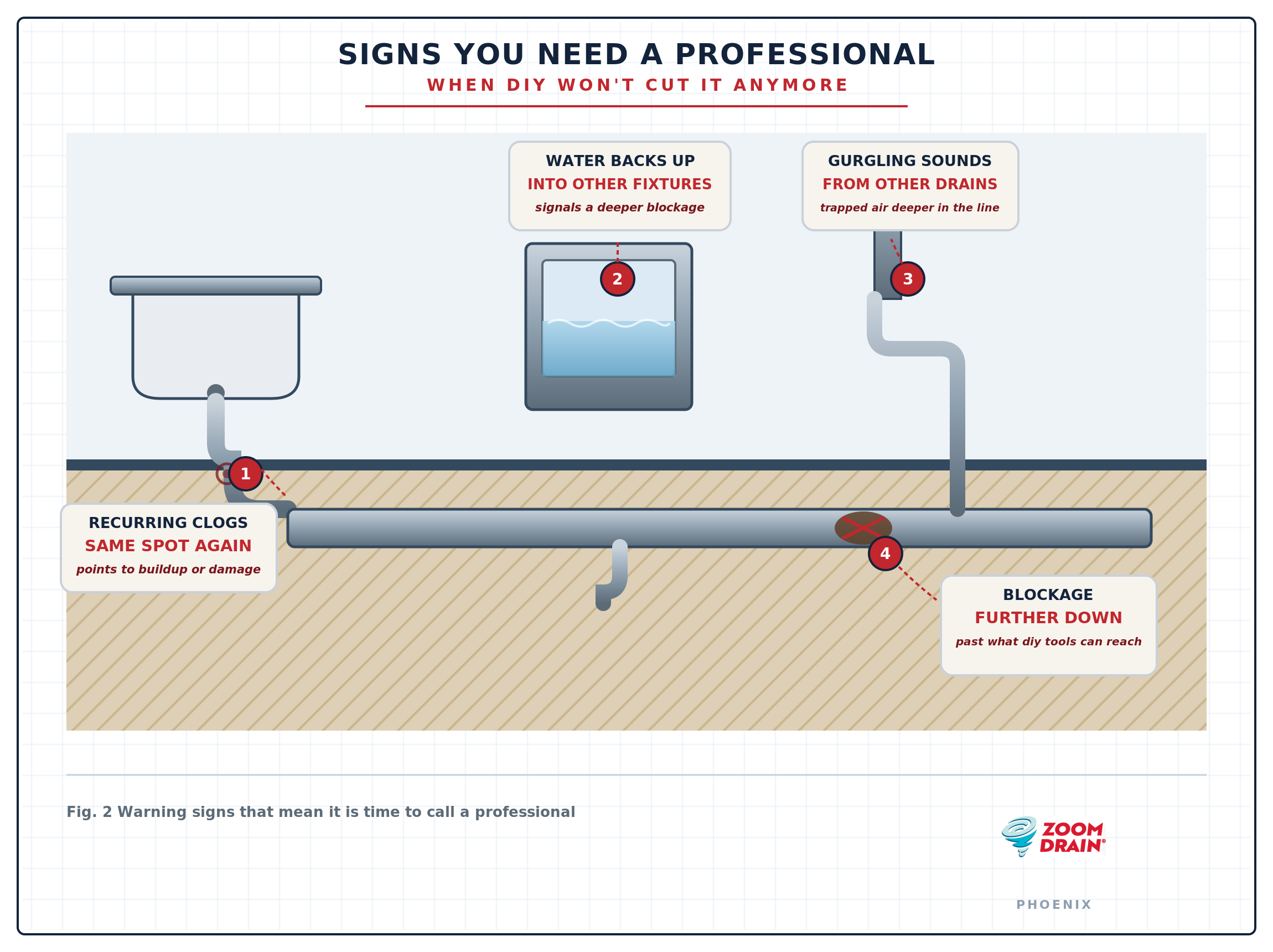
Why does my sink clog in the same spot over and over? A recurring clog in the same location almost always points to a specific cause, such as a buildup ring inside the P trap, a partially collapsed section of pipe, or grease that keeps accumulating on rough or damaged interior pipe walls. This pattern is one of the clearest signs it is time for a professional inspection rather than continuing to treat the symptom.
What should I do if the clog affects both sides of a double basin sink? This usually means the blockage is past the point where the two basins connect into a single drain line, which is deeper in the system than these DIY methods can typically reach. A professional inspection is the safest next step.
Are garbage disposals more prone to clogs than sinks without one? Not necessarily, but they do change the type of debris that ends up in the drain line. Disposals break food into smaller pieces that can still accumulate over time, especially fibrous or starchy foods, so the same prevention habits apply whether or not a disposal is installed.
Most kitchen sink clogs can be handled with the simple household methods above, but not every clog is what it appears to be on the surface. When a blockage keeps coming back, affects more than one fixture, or simply will not clear no matter what you try, it usually means the problem sits further down the line where household tools cannot reach. Zoom Drain Phoenix specializes exactly in these situations, using professional grade equipment and camera inspection technology to find the real cause of a stubborn clog rather than just treating the surface symptoms.
Our technicians arrive with the tools to handle everything from a simple P trap blockage to a deeper line obstruction, and every job comes with upfront flat rate pricing so you know the cost before any work begins. Whether you are dealing with a kitchen sink that will not drain no matter what you try, or you would rather skip the troubleshooting altogether and get it handled quickly, call Zoom Drain Phoenix today at (602) 613 1114 or book service online for fast, reliable drain clearing across the greater Phoenix area.