Written by
Zoom Drain Phoenix Team
Published on
August 10, 2026

A clogged toilet rarely waits for a convenient moment, and it's not unusual to reach under the sink for the plunger only to realize it isn't there, or that a house guest already borrowed it and never brought it back. The good news is that a plunger is just one tool for breaking up a clog, not the only one. Several household methods can clear a mild to moderate toilet blockage using items already sitting in a kitchen cabinet, and most of them take less than half an hour from start to finish.
At Zoom Drain Phoenix, we get calls every week from homeowners who tried everything before picking up the phone. This guide walks through the most reliable plunger-free methods, when to use each one, and the warning signs that mean it's time to stop troubleshooting and call a professional. Need help right now? Call us at (602) 613-1114 or book your service online for fast, flat-rate drain and sewer service.
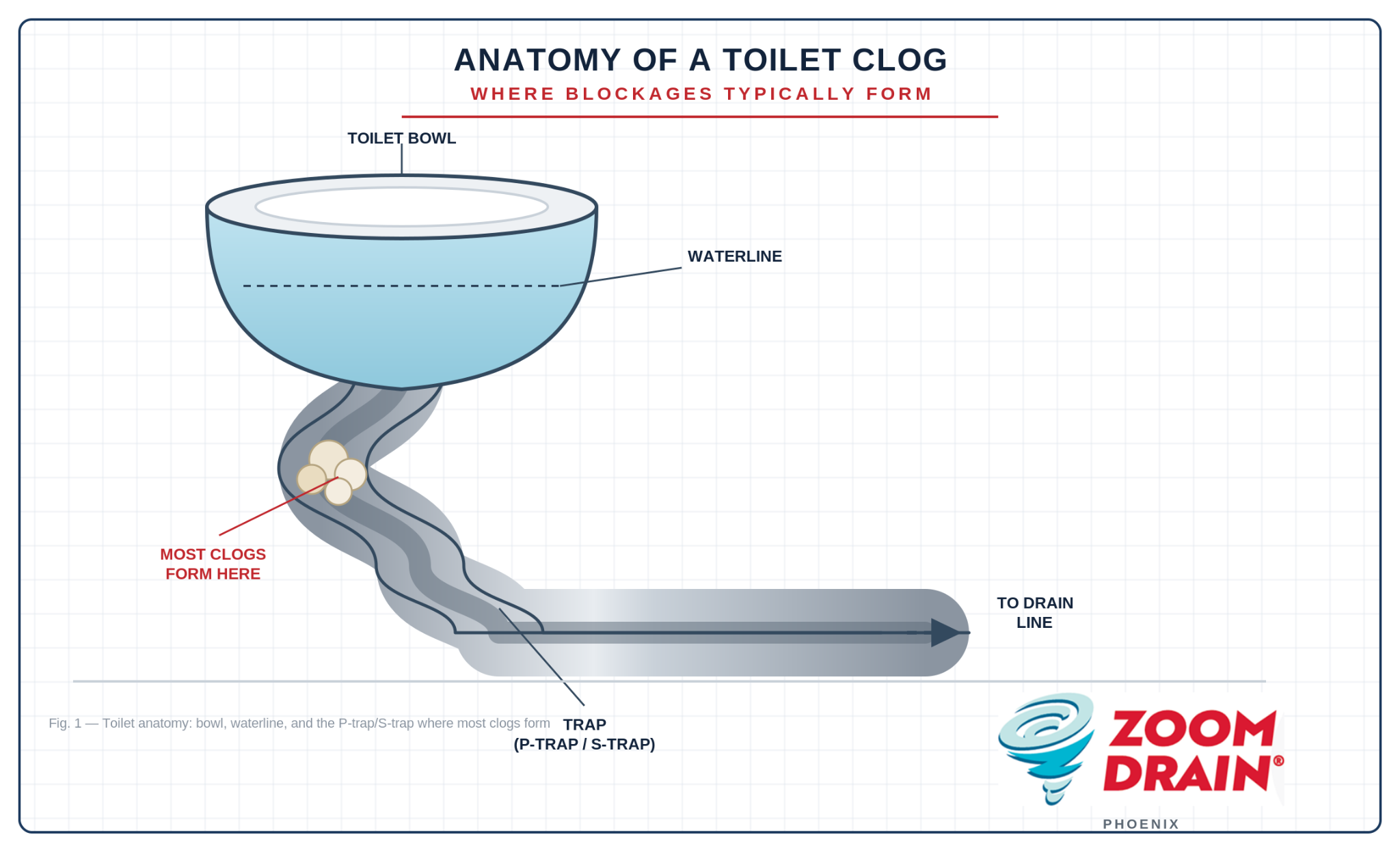
Every toilet has a built-in curved section called the trap (sometimes called a P-trap or S-trap) just below the bowl. This trap holds a small amount of water at all times to block sewer gas from entering the home, and it's also the single most common place a clog forms. Toilet paper, wipes, and other solids catch on the curve of the trap and build up until water can no longer pass through freely.
Most plunger-free methods work by either dissolving what's caught in the trap, breaking it apart mechanically, or using water pressure and gravity to push it through. Knowing this helps explain why some tricks work well on paper clogs but do very little against a toy, a diaper, or a foreign object lodged in the trap.
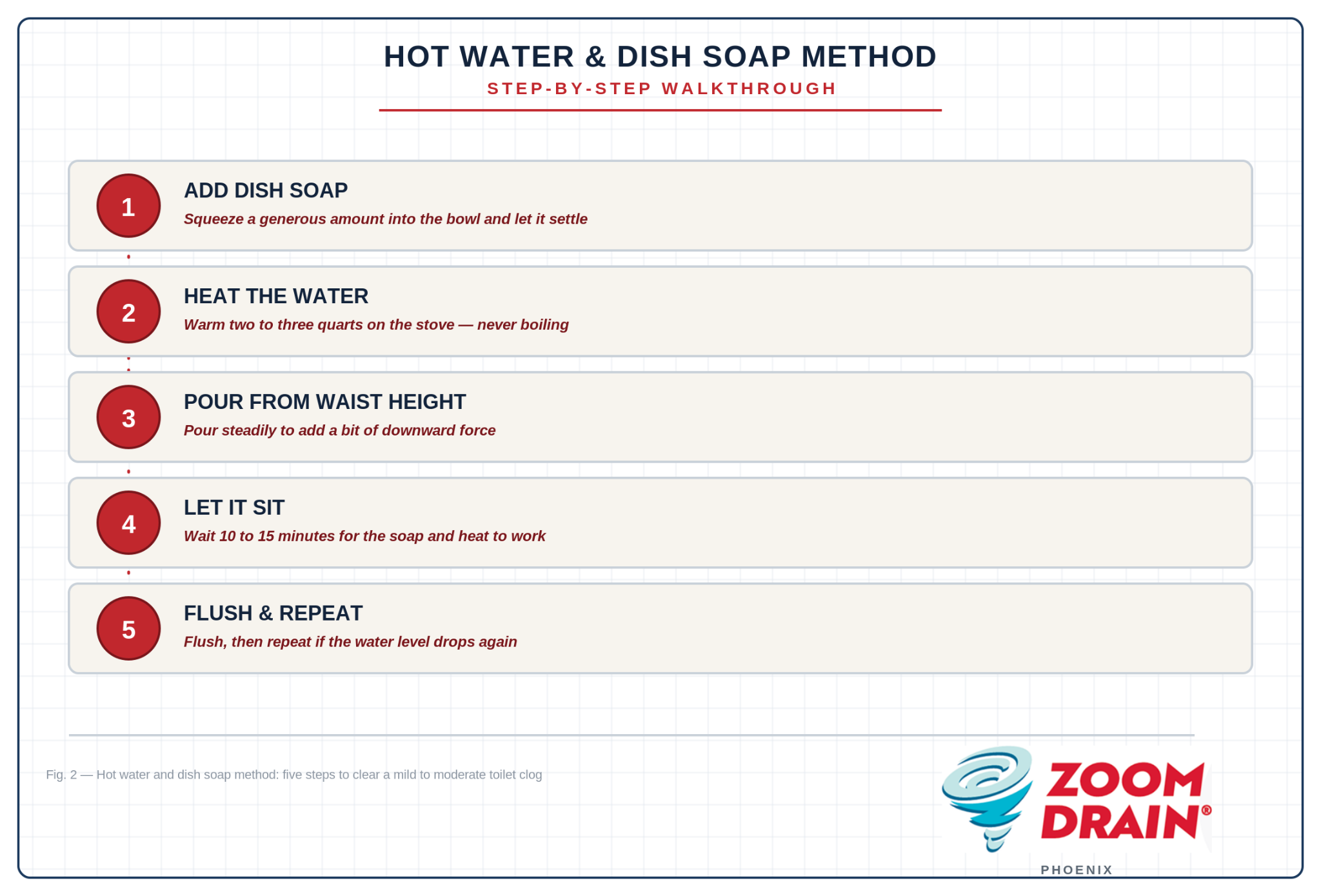
This is the first method most plumbers recommend trying, and it requires nothing more than a squeeze of dish soap and water heated on the stove (never boiling, which can crack porcelain).
This classic combination creates a fizzing chemical reaction that can help loosen minor clogs, particularly ones caused by paper buildup rather than solid objects.
This method is gentler than hot water and soap alone, so it works best on light clogs or as a first attempt before moving to more aggressive options.
When soap and hot water aren't enough, a straightened wire hanger can act as a makeshift drain snake for reaching just past the trap.
Use light pressure throughout. Metal hangers can scratch porcelain or damage a wax ring seal if forced too hard, so this method calls for patience rather than strength.
Enzyme or bacteria-based drain treatments break down organic waste over several hours rather than instantly, making them a good option for a slow-draining toilet that isn't fully blocked. Unlike harsh chemical drain openers, enzyme treatments are generally safer for older pipes and septic systems, though they work far too slowly for a fully backed-up bowl.
None of these four methods are mutually exclusive. It's common to start with hot water and dish soap, move on to baking soda and vinegar if the first attempt only partially works, and reach for a wire hanger only once the softer approaches have run their course. Working from gentlest to most aggressive protects the porcelain and the wax ring seal beneath the bowl, and it also makes it easier to tell how serious the clog actually is.
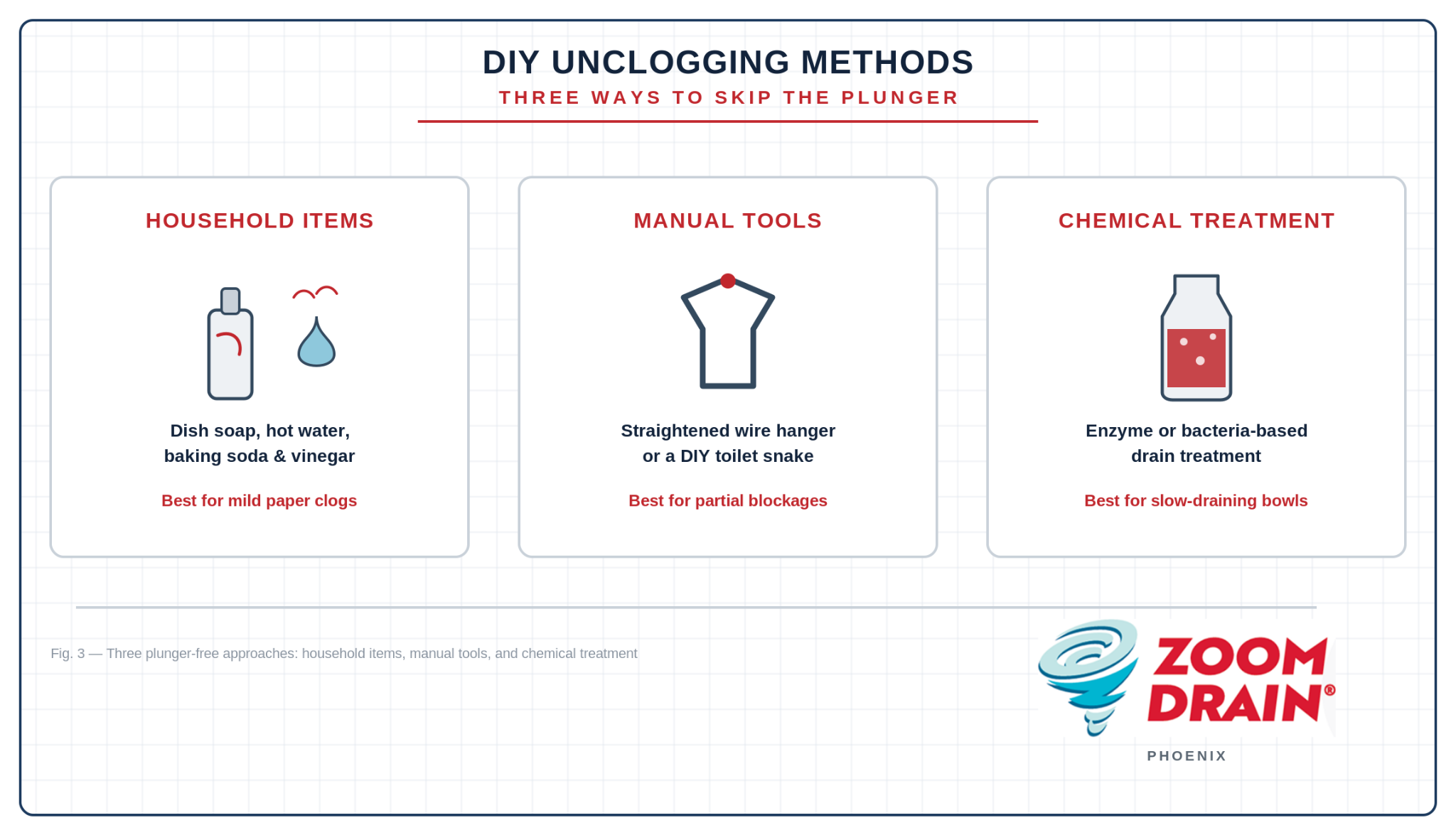
Before reaching for any tool, it helps to know what each method is actually good for. The table below compares the four approaches side by side.
Some clogs are simply too far down the line, too solid, or too large for a DIY fix. If a toilet clog also comes with slow drains elsewhere in the house, gurgling sounds from other fixtures, or repeated backups after every attempted fix, the blockage may not be in the toilet at all. It could be further down the sewer lateral, and that requires a professional inspection rather than another home remedy. Continuing to flush or repeat the same home fix at that point usually just delays a simple repair and risks turning it into a more expensive one.
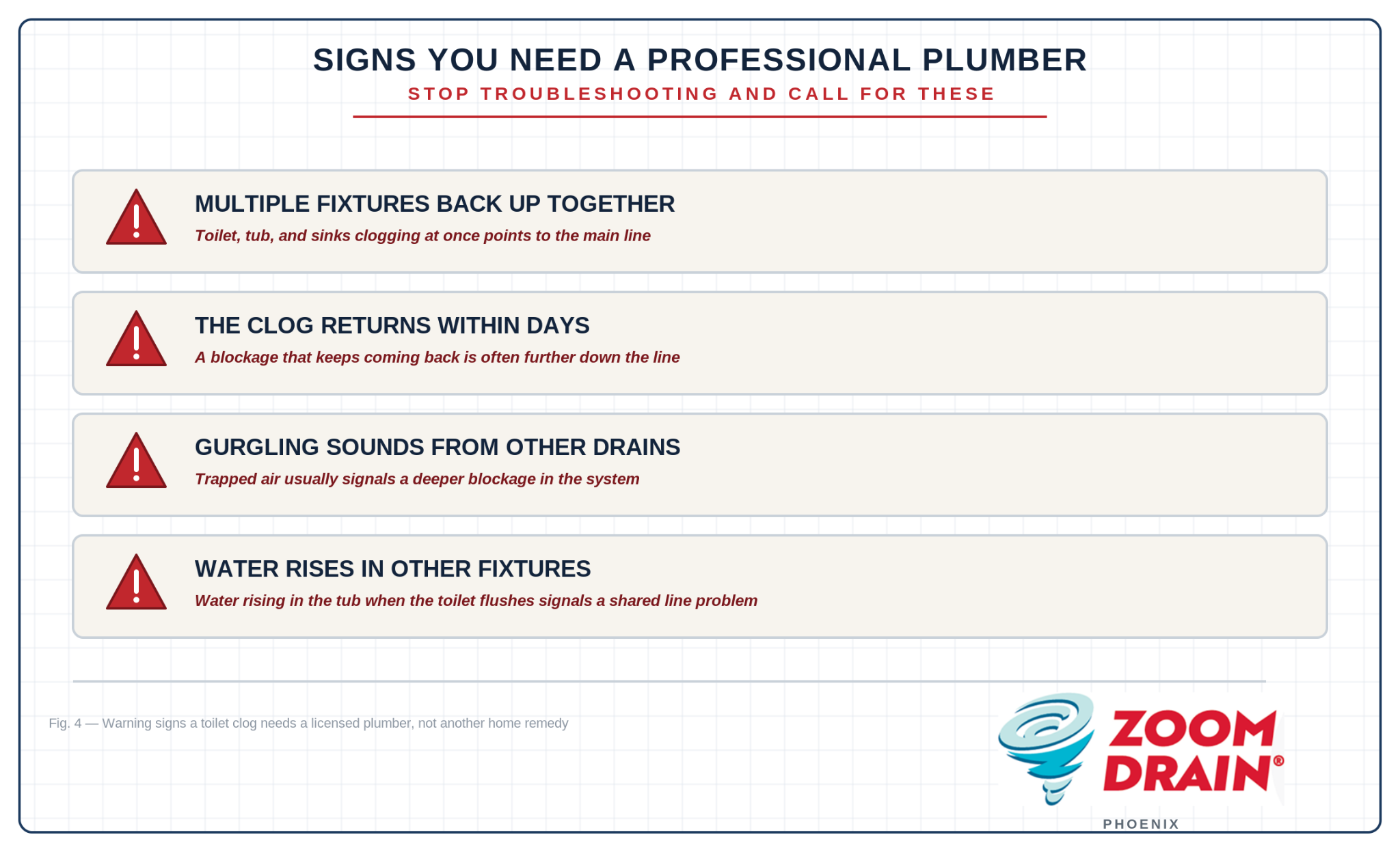
When a clog goes beyond what dish soap, baking soda, or a wire hanger can handle, our licensed technicians bring the right equipment the first time, including motorized cabling, high-pressure hydro jetting, and camera inspection tools to see exactly what's causing a backup. A few reasons Phoenix homeowners choose us:
A stubborn toilet clog is often the first sign of a larger drain or sewer issue, and catching it early can save significant repair costs down the road.
If dish soap, baking soda, and a wire hanger haven't cleared things up, it's time to bring in a professional. Contact Zoom Drain Phoenix today at (602) 613-1114 or book your service online for flat-rate, same-day drain and toilet clearing service across the Greater Phoenix area.