What a Sewer Camera Inspection Actually Shows You: The Complete Visual Diagnostic Guide
A sewer camera inspection uses a high definition camera to identify underground pipe problems such as roots, cracks, blockages, corrosion, and standing water without excavation. It provides an accurate diagnosis that helps determine the most effective repair while reducing unnecessary digging and costs.
When underground wastewater lines begin to fail, homeowners and commercial property managers often face a frustrating reality. The true cause of the breakdown's buried under feet of dirt, concrete, or building foundations. Historically, diagnosing a main line failure required costly exploratory digging, excavating yards and breaking up slab floors just to locate a pipe defect.
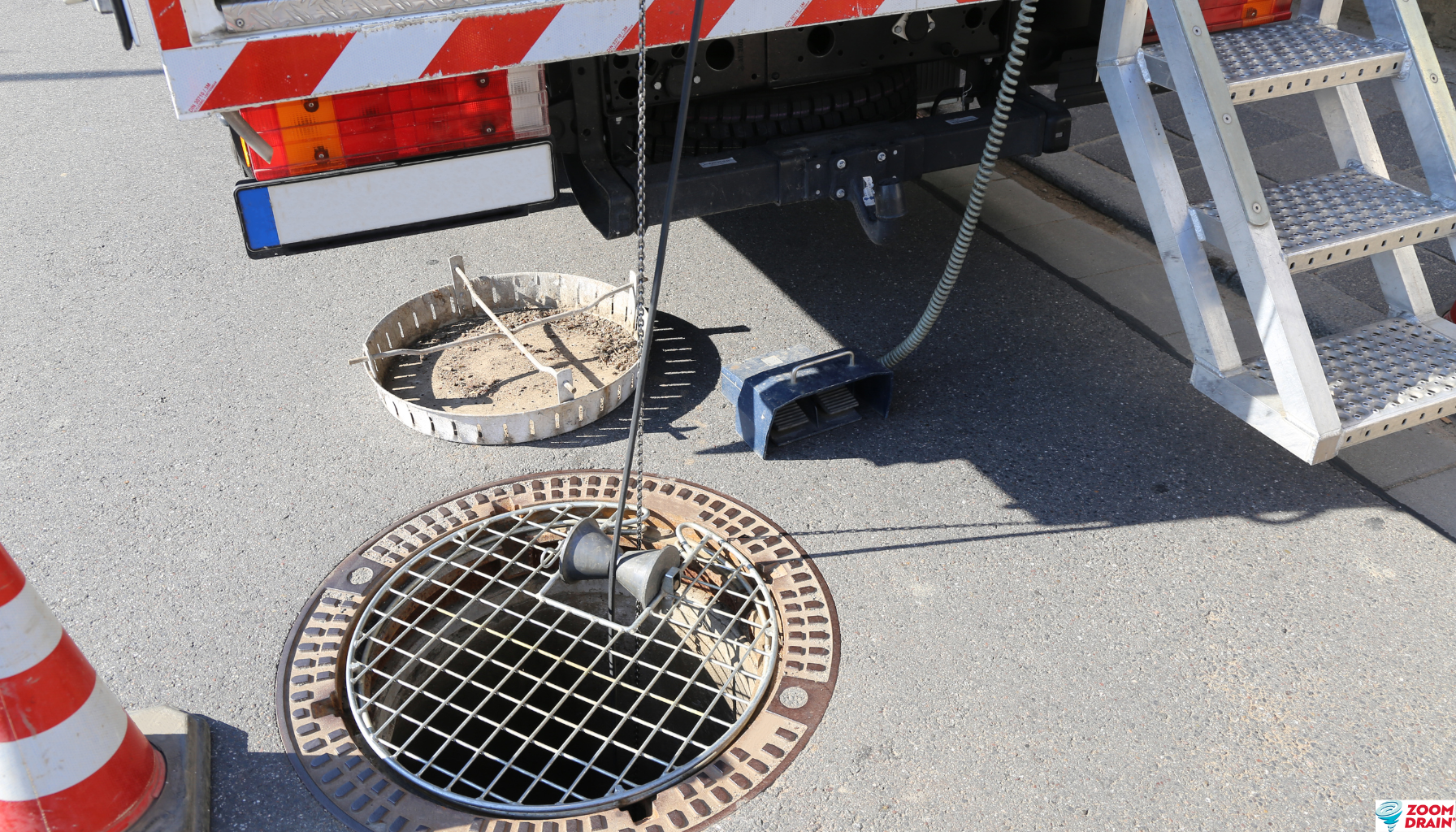
Modern wastewater diagnostics rely on high definition sewer video camera inspections. By threading a self leveling, high intensity optical camera through a property's sewer lateral, drainage technicians can visually inspect the entire interior profile of an underground pipe in real time.
At Zoom Drain Phoenix, our team uses state of the art sewer inspection equipment to eliminate guessing, locate underground pipe defects accurately, and provide clear diagnostic footage before any service or repair begins.
Understanding what a sewer camera can and cannot see, alongside the structural defects it exposes, is essential for making informed decisions regarding pipe cabling, high pressure hydro jetting, trenchless lining, or physical excavation.
Need a Sewer Camera Inspection in the Greater Phoenix Area?
Don't guess what's causing your drain backups. Contact the sewer diagnostic experts at Zoom Drain Phoenix today at (602) 613-1114 to schedule your flat rate video camera inspection or book your service online now!
Need a Sewer Camera Inspection in the Greater Phoenix Area?
1. How a Sewer Camera Inspection Works
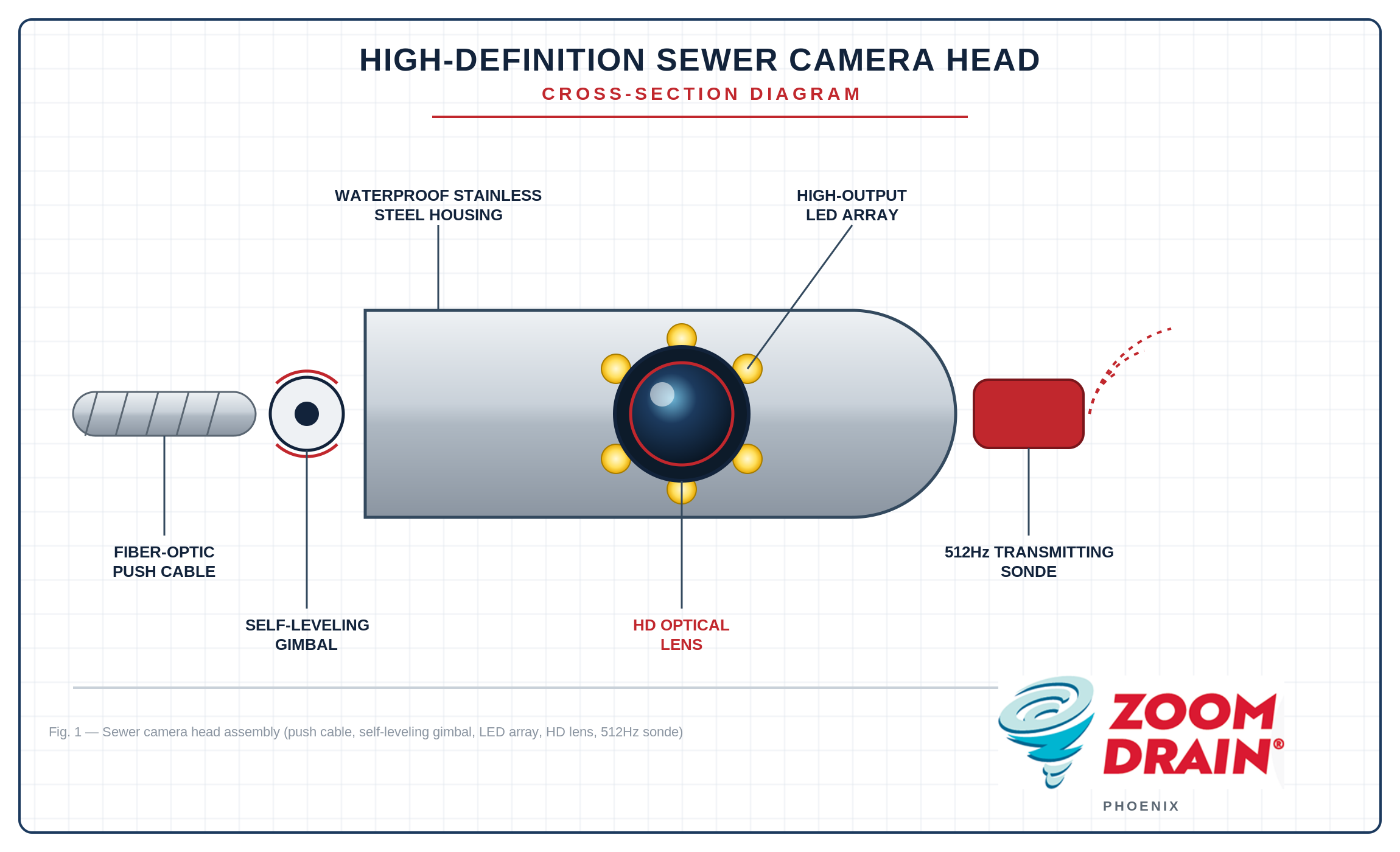
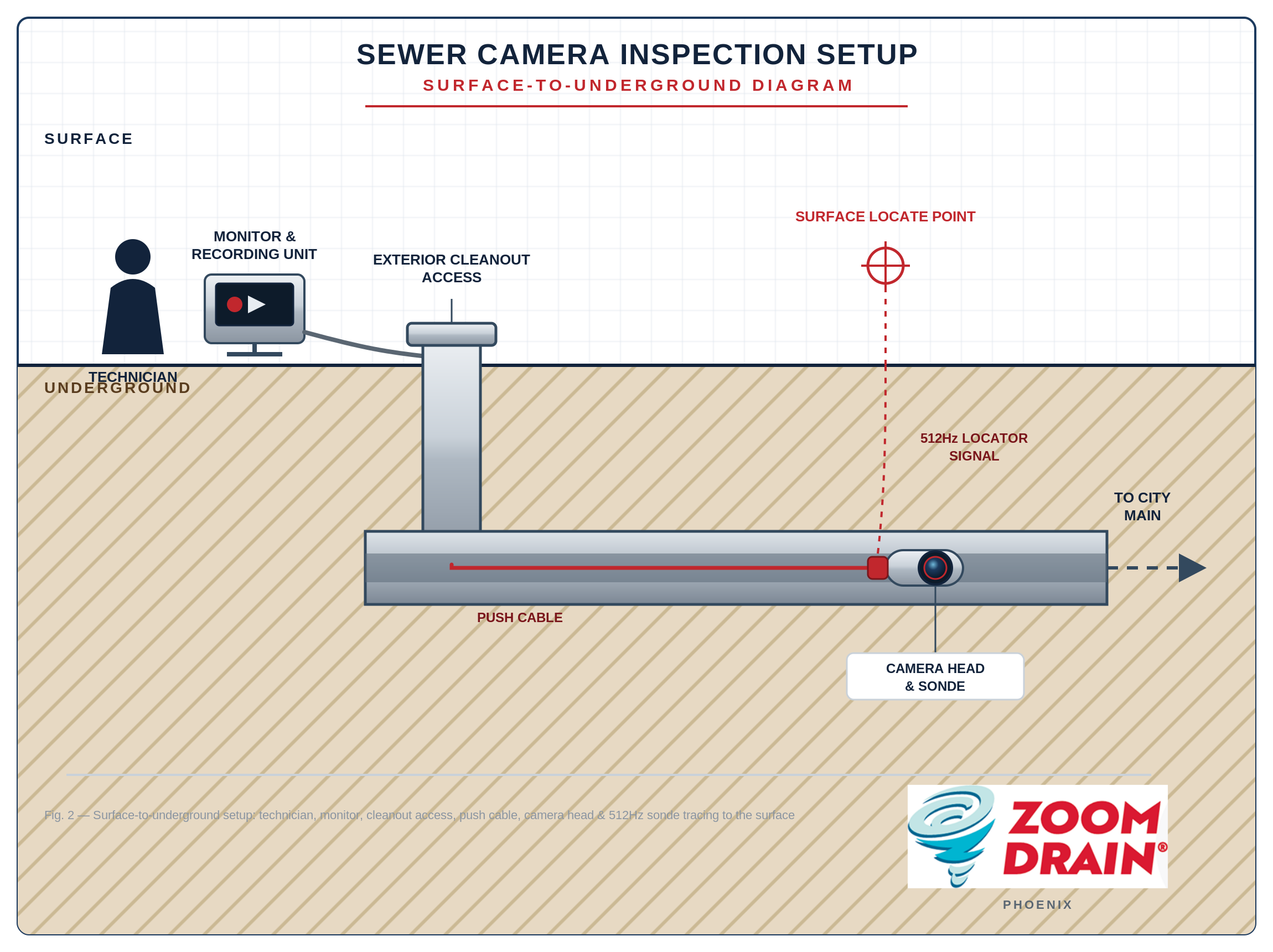
A sewer camera inspection's a non invasive diagnostic procedure. The system consists of four primary components:
The Fiber Optic Push Cable: A rigid yet flexible fiberglass rod housing electrical wiring that transmits power down to the camera head and carries high definition video signals back up to the surface monitor.
The Camera Head: A waterproof stainless steel housing equipped with high output LED arrays and a high resolution optical lens. Professional heads feature self leveling gimbals that keep the video feed upright regardless of how the camera twists inside the pipe.
The 512Hz Transmitting Sonde: A specialized locator beacon embedded behind the camera head. As the camera travels down the pipe, an above ground technician uses a handheld receiver to trace the sonde's electromagnetic signal, marking the exact surface position and depth of the camera below ground.
The Recording & Digital Interface Box: An above ground monitor unit that records real time footage, tracks linear footage distance traveled from the entry point, and overlays pitch readings or slope percentages.
How a Sewer Camera Inspection Works
2. What a Sewer Camera Can Show You
A sewer camera provides a direct, lit visual recording of the interior surface of a pipe. Here're the precise structural and environmental conditions a sewer camera reveals:
Root Intrusions
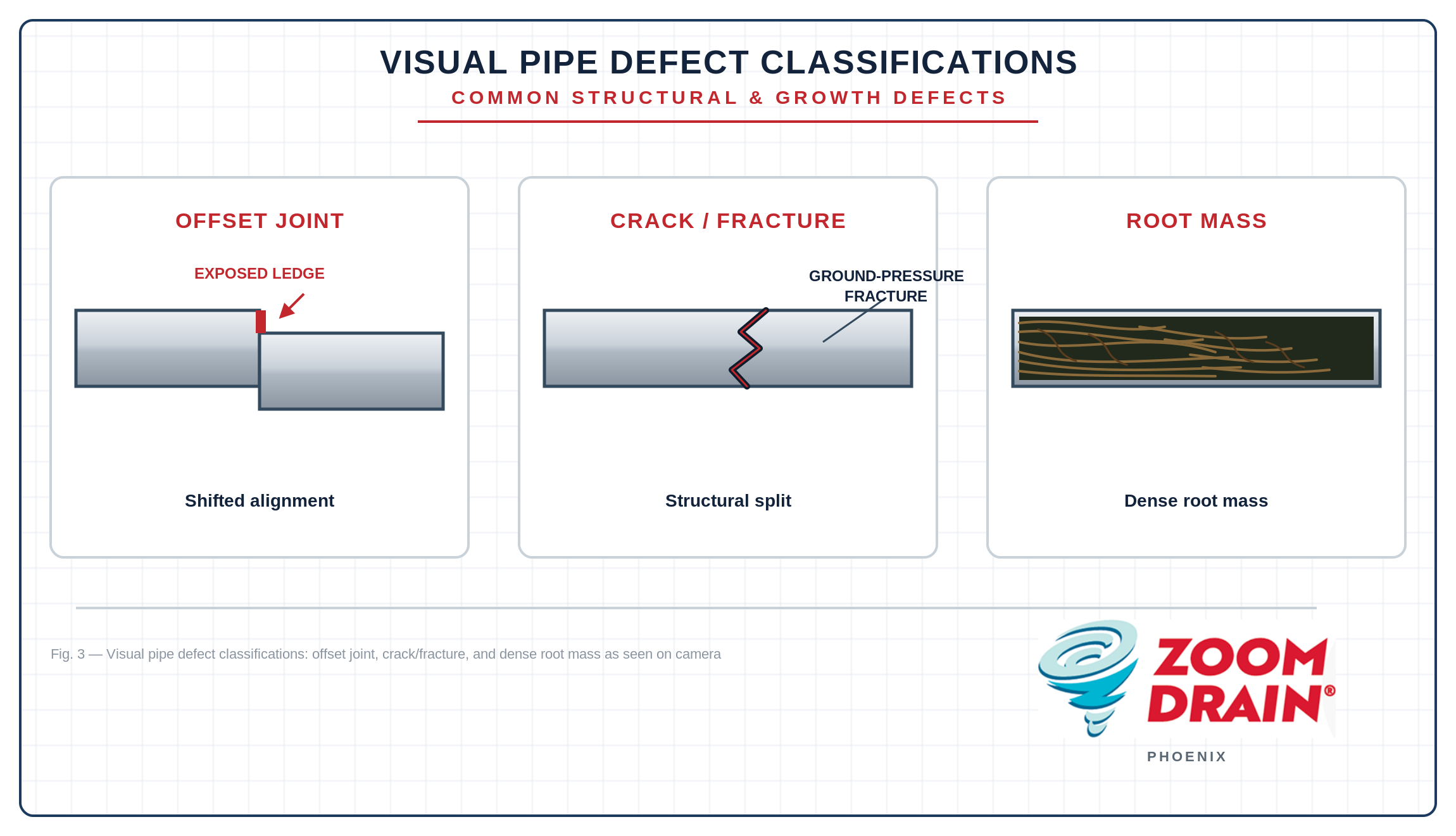
Tree roots track the faint thermal signals and moisture leaks escaping through small pipe joints. Once inside, root fibers blossom into dense webs. On camera, root intrusion appears in distinct growth stages:
Hairline Intrusions: Thin, stringy tendrils creeping through joint seams.
Tapestry Intrusions: Thick, mat like networks covering 20 to 50 percent of the pipe diameter.
Massive Blockage Intrusions: Solid root masses filling over 80 percent of the pipe cavity, trapping toilet paper and solid waste behind them.
Structural Pipe Defects
Offset Joints: Occurs when ground movement causes two connecting pipe sections to shift out of alignment. On camera, an offset looks like a distinct lip or ledge inside the line.
Cracks and Fractures: Visualized as dark, jagged lines running along the pipe wall. Hairline cracks appear on the surface, while structural fractures show visible gaps where soil or groundwater leaks into the pipe.
Sheared or Collapsed Lines: Complete structural failures where the top wall of the pipe's caved inward, blocking passage of both wastewater and the camera itself.
Pipe Corrosion and Wall Degradation
Cast Iron Tuberculation: Older cast iron pipes develop heavy, jagged iron oxide crusts known as tuberculation. On a camera feed, this looks like a dark, rough cave wall filled with pits and ridges that grab passing toilet paper.
Clay Pipe Flaking and Delamination: Vitrified clay pipe walls can spall or flake over decades of exposure to abrasive waste.
PVC Pipe Deformation: Plastic pipes subjected to heavy soil weight or improper backfilling can ovalize or flatten out from a perfect circle.
What a Sewer Camera Can Show You
Foreign Objects and Debris
Camera inspections frequently expose obstructions caused by non flushable items:
Accumulations of wipes, sanitary products, and paper towels.
Children's plastic toys, construction debris, or rocks introduced through open cleanouts.
Grease dams formed when liquid fats cool, solidify, and cling to upper pipe walls.
Pipe Slope, Bellies, and Standing Water
Drainage lines rely entirely on gravity, typically requiring a downward slope of one quarter inch per foot. Soil settling beneath a pipe creates a belly, which's a low spot where gravity fails.
On a camera monitor, entering a pipe belly's marked by the lens submerging into murky standing water.
As the camera moves deeper into the belly, visibility drops to zero until the head climbs out the other side onto dry pipe wall.
Digital camera systems record precise distance markers, showing exactly where a belly begins and ends, such as submerged from 22 feet to 34 feet.
3. Comprehensive Diagnostic Comparison Matrix
The table below outlines what different visual indicators on a sewer camera feed mean for the long term health of your main lateral line:
Diagnostic Comparison Matrix
Visual Indicator on Camera Feed
Primary Cause
Severity Level
Recommended Corrective Action
Fine Root Tendrils at Joints
Moisture leaks at clay or cast iron seams
Low to Moderate
Mechanical cabling or light hydro jetting followed by root inhibiting treatments
Thick Root Webbing (>50% Blocked)
Unaddressed long term root growth
High
Industrial hydro jetting or mechanical root cutting; evaluate line for trenchless lining
Submerged Lens / Standing Water
Soil settling creating a pipe belly
Moderate to Severe
Mechanical clearing opens temporary flow; full correction requires physical excavation and regrading
Jagged Internal Pitting (Cast Iron)
Advanced tuberculation and hard water scale
Moderate
Mechanical pipe descaling using specialized carbide chains or high pressure water scouring
Visible Lip at Pipe Connection
Soil movement or improper joint seating
Moderate
Monitor if minor; line cabling must be done carefully to avoid catching blades on the exposed lip
Jagged Black Lines across Wall
Pipe fracture due to ground pressure
High to Critical
Spot repair, continuous cured in place pipe lining, or full pipe replacement
Visible Dirt / Caved in Pipe Crown
Structural pipe collapse
Critical / Emergency
Total line replacement via traditional excavation or pipe bursting
White or Yellow Congealed Mass
Grease disposal down kitchen sinks
Low to Moderate
High pressure hydro jetting to scour fats and oils off upper interior pipe walls
4. What a Sewer Camera Cannot Show You
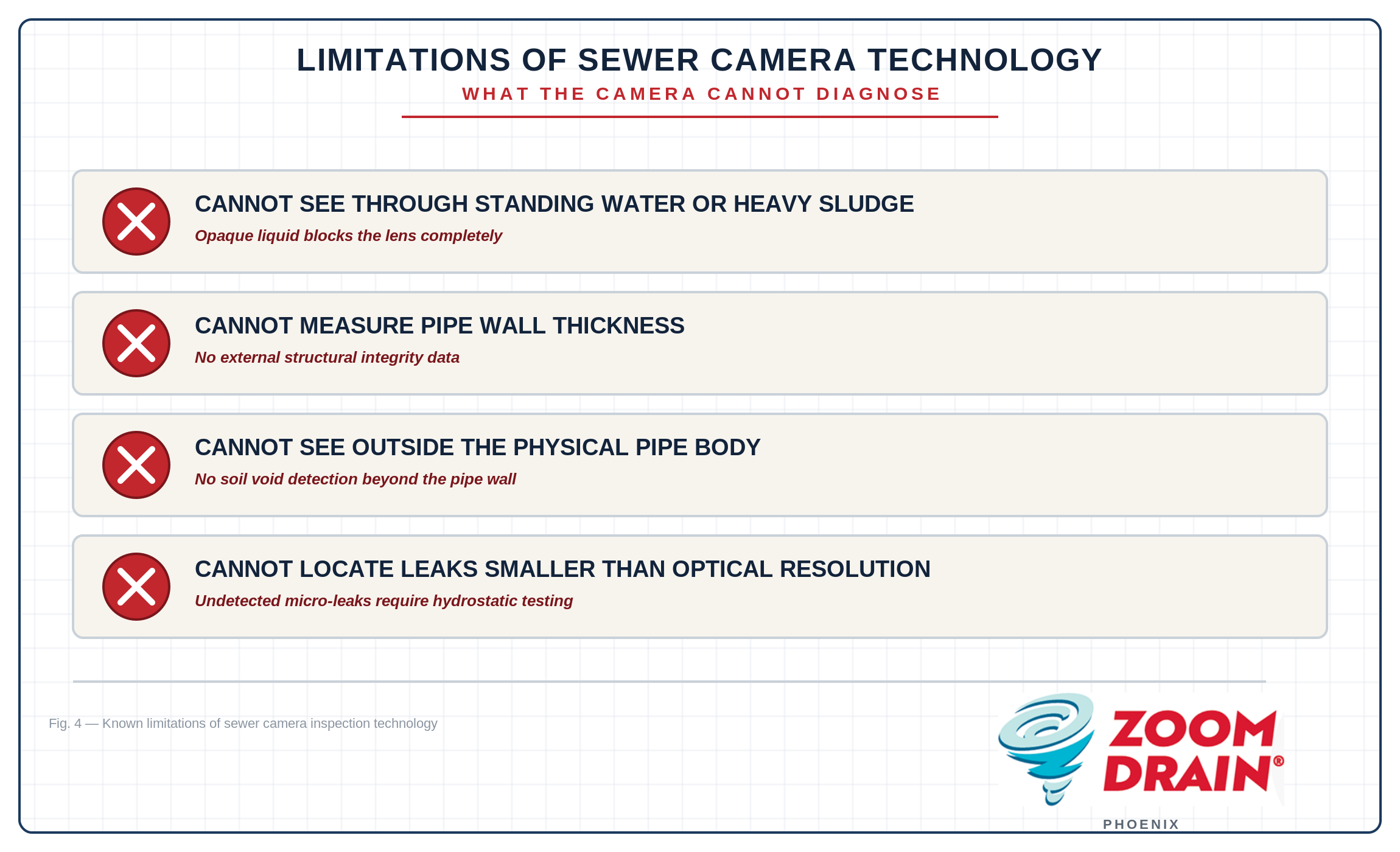
While sewer video cameras are the most powerful diagnostic tool in modern drain cleaning, they have clear physical limitations. Understanding these limits prevents misdiagnosis:
What a Sewer Camera Cannot Show You
1. It Cannot See Through Standing Water or Opaque Sludge
Camera lenses require liquid clarity to capture images. If a pipe's completely backed up with dark sewage, grease, or heavy mud, the camera lens submerges into black water, rendering the monitor screen completely dark.
The Zoom Drain Solution: Our technicians first clear standing wastewater using mechanical cabling or high pressure hydro jetting before performing an accurate video camera inspection.
2. It Cannot Determine Pipe Wall Thickness
A camera feed shows the interior surface of a pipe, but it can't measure how thin a metal or clay pipe wall has worn due to age or chemical corrosion. A cast iron pipe may look straight on camera while its bottom wall has rusted down to a paper thin shell.
3. It Cannot Detect Soil Voids Outside the Pipe
When a sewer line fractures, escaping wastewater washes away surrounding dirt, creating underground voids or empty pockets of earth. Because the camera stays inside the pipe, it can't determine whether the soil surrounding the pipe remains compacted or has washed away.
4. It Cannot Confirm Micro Leaks
While cameras locate major cracks and joint separations, they can't verify whether a pipe's 100 percent water tight. Locating tiny microscopic leaks requires hydrostatic pressure testing, which involves plugging the pipe and filling it with water to measure pressure drop over time.
5. Why Property Owners Trust Zoom Drain Phoenix
When you schedule a sewer camera inspection with Zoom Drain Phoenix, you receive complete visual confirmation and expert guidance every step of the way:
State of the Art Camera Tech: We utilize color recording camera systems equipped with digital footage counters and self leveling heads so you'll see your pipe's condition in crystal clarity.
Precision Surface Location: Our 512Hz sonde technology lets us pinpoint the exact underground depth and location of any pipe damage, avoiding unnecessary digging in your lawn or driveway.
Transparent Video Documentation: We share the recorded video footage directly with you, providing honest recommendations and clear, upfront flat rate menu pricing before any work begins.
Fast Emergency Response: When facing a severe sewer backup, our specialized drain service trucks arrive fully equipped to diagnose and clear your line on the very first visit.
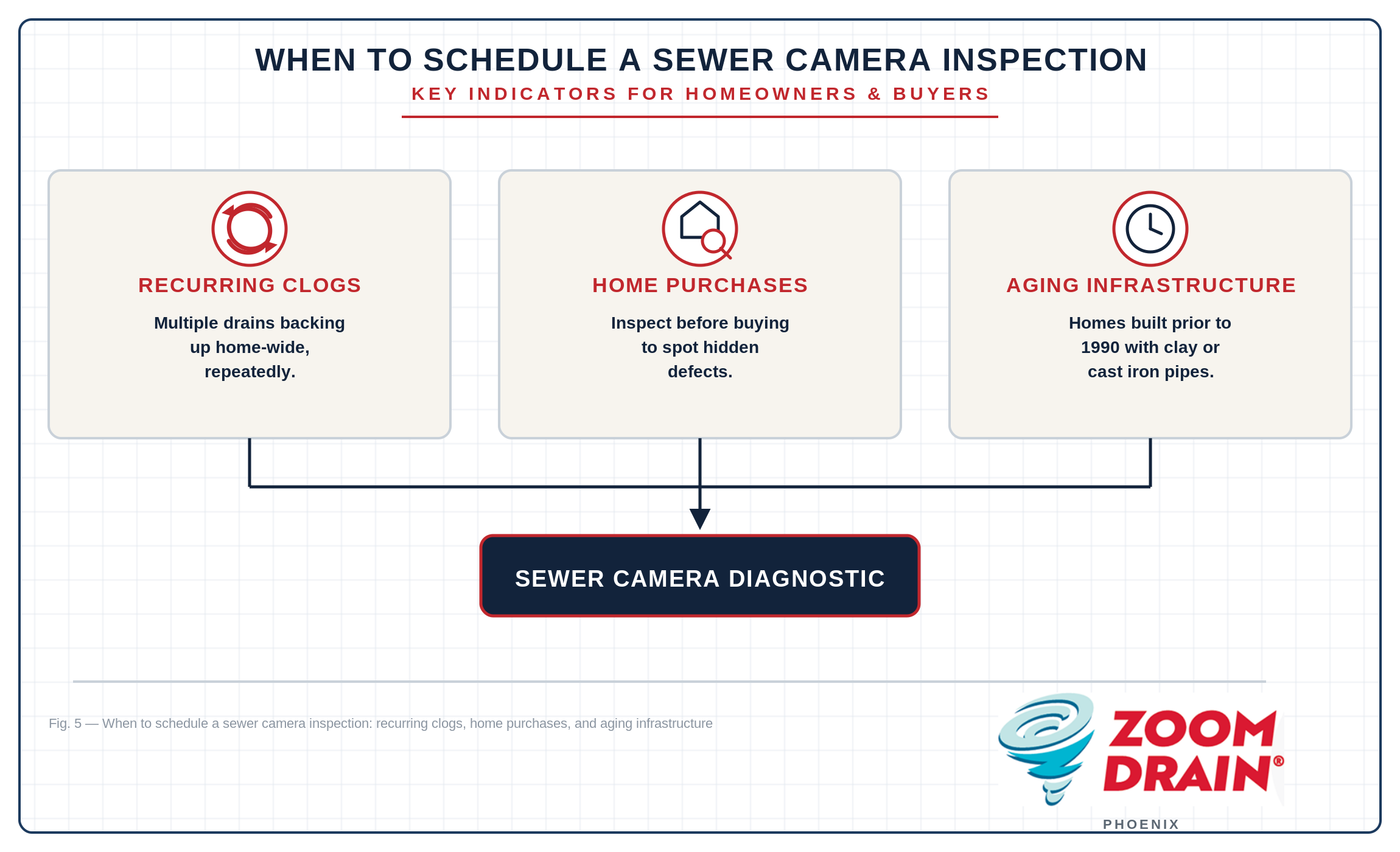
6. Key Indicators: When Should You Get an Inspection?
A video sewer inspection's recommended in several routine and emergency scenarios:
Key Indicators: When Should You Get an Inspection?
Purchasing a Residential or Commercial Property: Standard home inspections rarely cover the underground sewer main lateral. A camera inspection identifies hidden pre existing pipe failures before closing a purchase.
Repeated Whole House Backups: If multiple fixtures like toilets, showers, and floor drains back up simultaneously every few months, an underlying structural failure or root invasion's present in the main line.
Homes Built Before 1990: Older properties frequently utilize vitrified clay, cast iron, or orangeburg tar paper piping materials that have reached the end of their operational lifespan.
Unexplained Yard Conditions: Unusually lush green patches of grass, sudden depressions in the lawn, or foul sewer odors outdoors strongly suggest a leaking or separated underground sewer main.
Schedule Your Video Camera Inspection Today
A sewer camera inspection provides visual clarity for underground wastewater infrastructure. By converting hidden pipe problems into high definition digital footage, property owners can pinpoint defects down to the exact linear foot and depth.
Whether dealing with stubborn tree root invasions, hard water mineral scaling, or structural pipe bellies, starting with a comprehensive video camera diagnostic ensures repairs're targeted, effective, and cost predictable.
Contact the local drain and sewer specialists at Zoom Drain Phoenix today at (602) 613-1114 or schedule your video camera inspection online to get fast, reliable sewer diagnostics!