Written by
Zoom Drain Phoenix Team
Published on
August 10, 2026

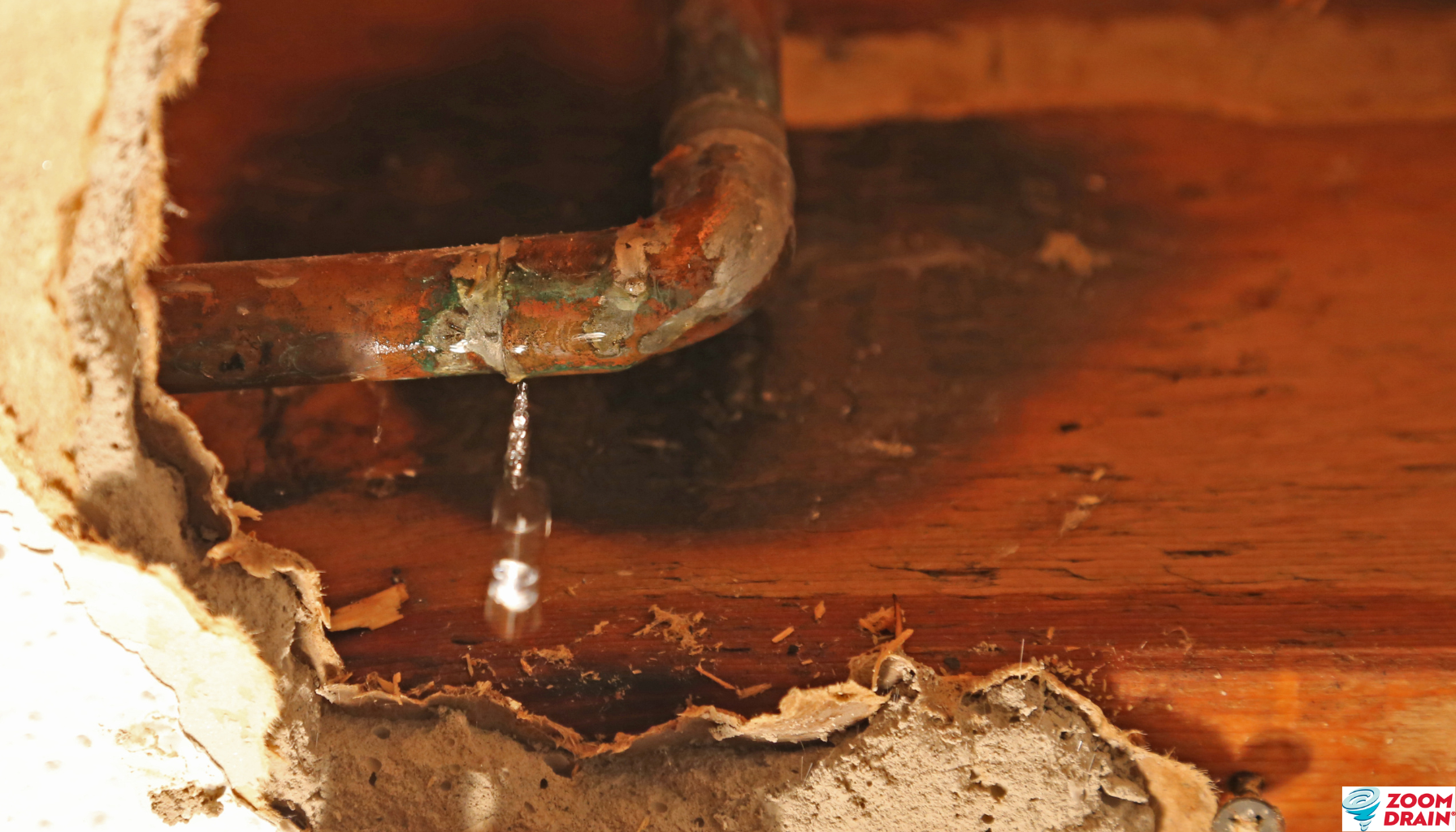
Every home's plumbing system has a lifespan, and for houses built with galvanized steel pipe, or homes simply old enough that decades of hard water have taken their toll, that lifespan eventually runs out. Repiping, replacing the water lines throughout a home with modern PEX or copper pipe, is a bigger project than a typical repair, but it is also one that solves the underlying problem rather than patching symptoms one leak at a time.
This guide covers the warning signs worth watching for, how to choose between PEX and copper, what the process actually looks like from start to finish, and what living in the home during the work is really like. Whole home repiping itself is outside what Zoom Drain Phoenix installs. Our specialty is sewer lines, trenchless spot repairs and full replacement, plus drain cleaning and camera inspections. If a damaged sewer line is part of what's going on, call us today at (602) 613-1114 for a free on-site diagnostic and flat rate quote.
A handful of warning signs, especially when more than one shows up at once, point toward a plumbing system that has reached the end of its useful life rather than a single isolated problem.
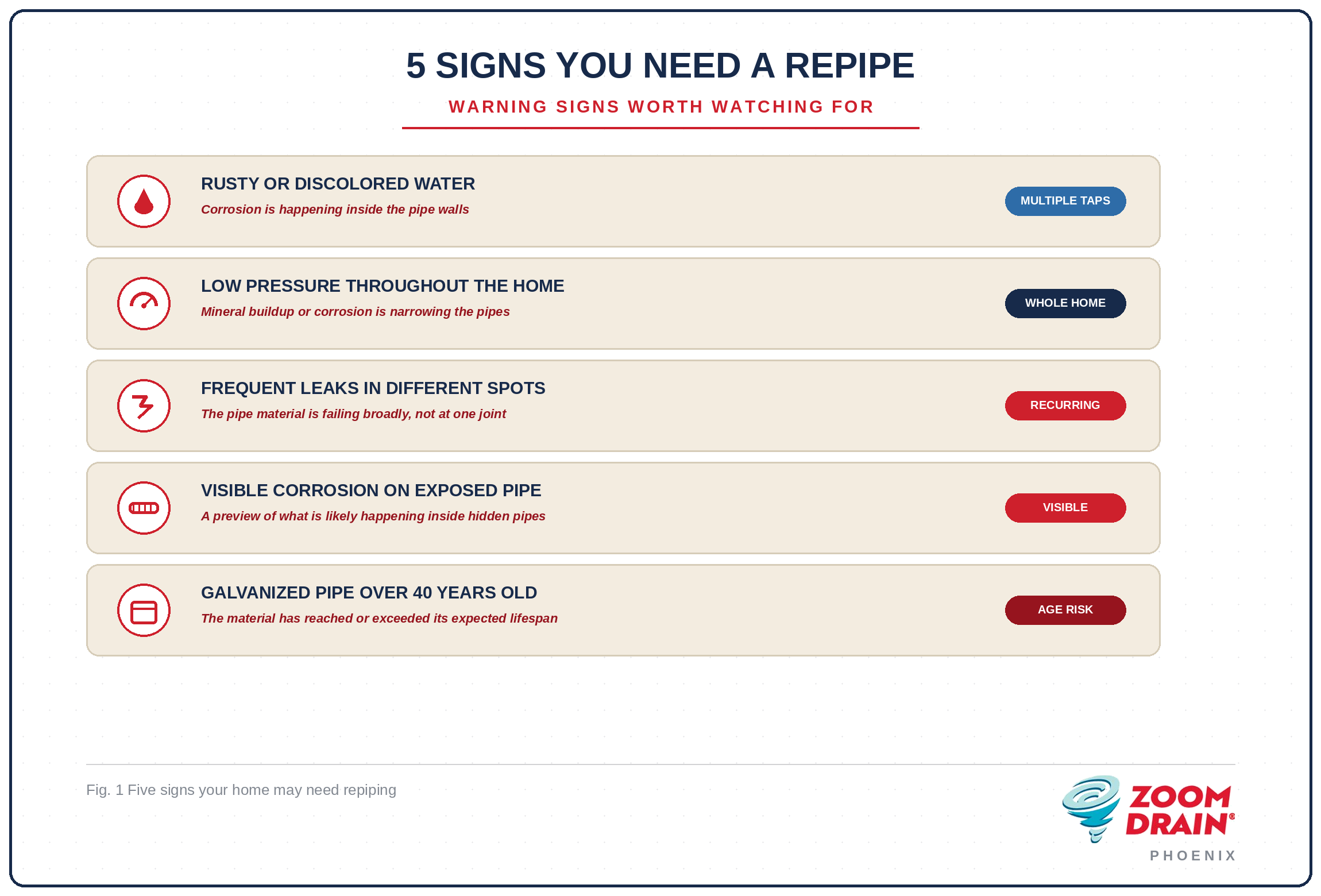
Rusty or discolored water coming from more than one faucet at the same time usually means corrosion is happening inside the pipe walls themselves, not just at a single fixture. Noticeably low water pressure throughout the home, rather than at just one tap, often means mineral buildup or corrosion is narrowing the pipe diameter across the system. Frequent leaks, especially ones that keep appearing in different spots rather than the same weak joint, suggest a pipe material that is failing broadly rather than a single bad connection. Visible corrosion, flaking, or discoloration on any exposed pipe, such as in a garage or utility closet, is often a preview of what is happening inside pipes you cannot see. And simply knowing your home has original galvanized steel supply lines and is more than forty years old is itself a strong signal, since that material was never designed to last indefinitely.
Galvanized steel pipe is coated in a layer of zinc that was originally meant to protect the steel underneath from rust. Over decades, especially on hot water lines, that zinc coating gradually wears away, exposing bare steel to water and oxygen. Once that happens, corrosion is essentially inevitable, and it builds up on the inside of the pipe where it cannot be seen until it starts affecting water quality or pressure. Most galvanized pipe lasts somewhere between forty and sixty years depending on water conditions, and homes throughout the Phoenix Valley with harder than average water often see that corrosion accelerate faster than the national average would suggest.
The tricky part is that this corrosion builds from the inside out, so a pipe can look completely fine on the outside while the interior diameter has narrowed significantly from decades of buildup. That is part of why system wide symptoms, like pressure dropping at multiple fixtures at once, are often the first real warning sign homeowners notice, well after the corrosion process has been underway for years.
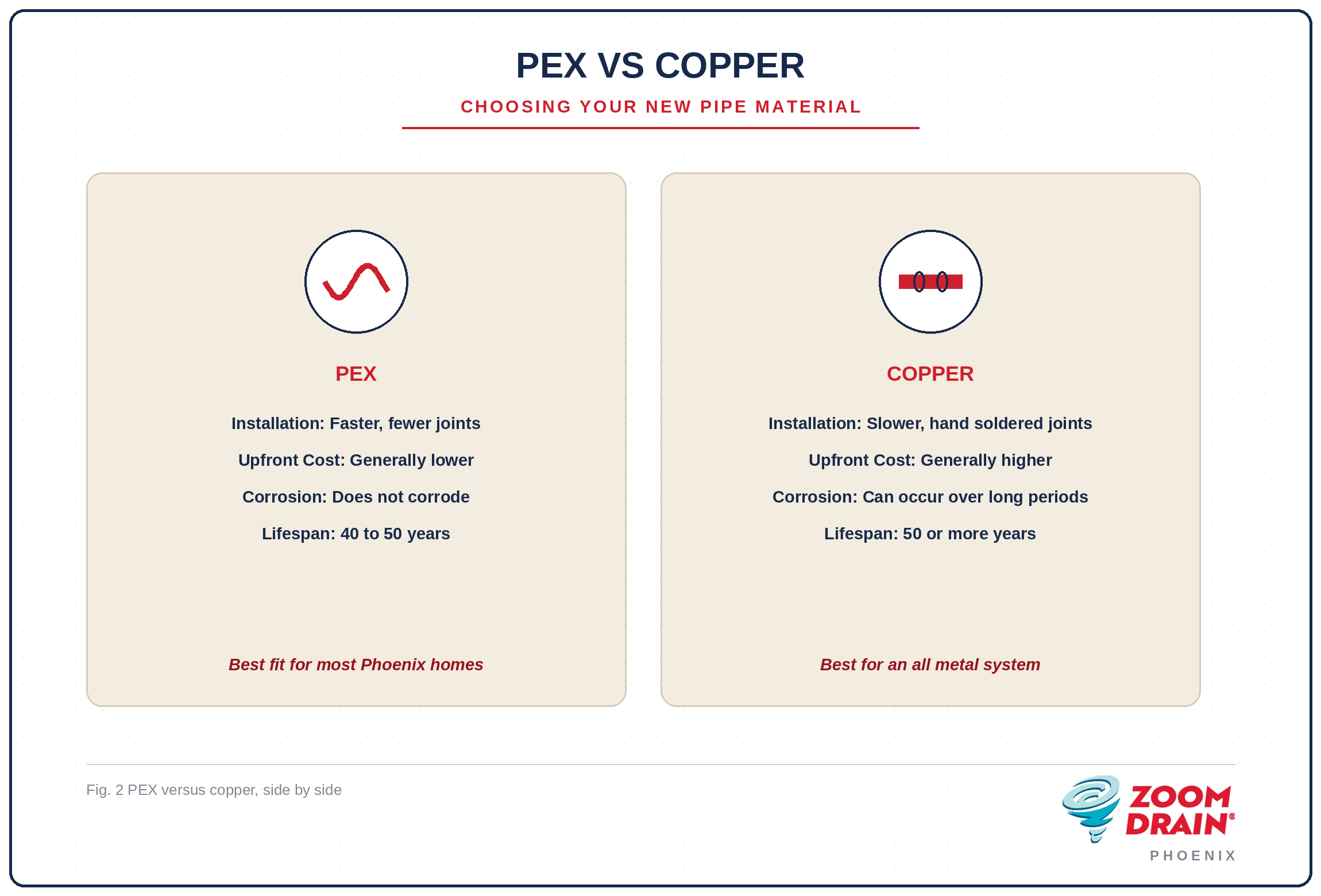
Once the decision to repipe is made, the next choice is which material to use. PEX is a flexible plastic tubing that has become the standard choice for most residential repipes, since it routes easily through walls and ceilings, requires fewer joints than rigid pipe, and installs noticeably faster. Copper remains the traditional choice, prized for its long service history and durability, though it costs more upfront and takes longer to install since every joint has to be soldered by hand.
For most Phoenix area homes, PEX offers the better balance of cost, installation speed, and long term performance, particularly because it does not corrode the way metal pipe can. Copper still makes sense in certain situations, such as specific code requirements or homeowner preference for an all metal system, and a licensed plumber can walk through which option fits your particular home.
A licensed plumber starts with a full inspection of the existing plumbing, mapping out every fixture and access point before recommending a material and outlining the scope of work. This step also includes pulling any required permits before work begins.
On the first day of work, the crew protects floors, furniture, and finished surfaces with plastic sheeting, then identifies the most efficient access points, which may include the attic, crawl space, or strategic cuts in select areas of drywall.
New PEX or copper lines are run throughout the home, typically starting with the areas that see the heaviest use, such as bathrooms and the kitchen. The old pipes generally stay connected and functional for as long as possible during this phase, minimizing how long water service is interrupted.
Once the new lines are in place, the crew connects them to every fixture, then pressure tests the entire system to confirm there are no leaks anywhere before the old pipe is disconnected and removed.
Any drywall or access points opened during the project are patched and prepared for paint, and a final walkthrough confirms full water pressure and proper function at every fixture in the home before the job is considered complete.
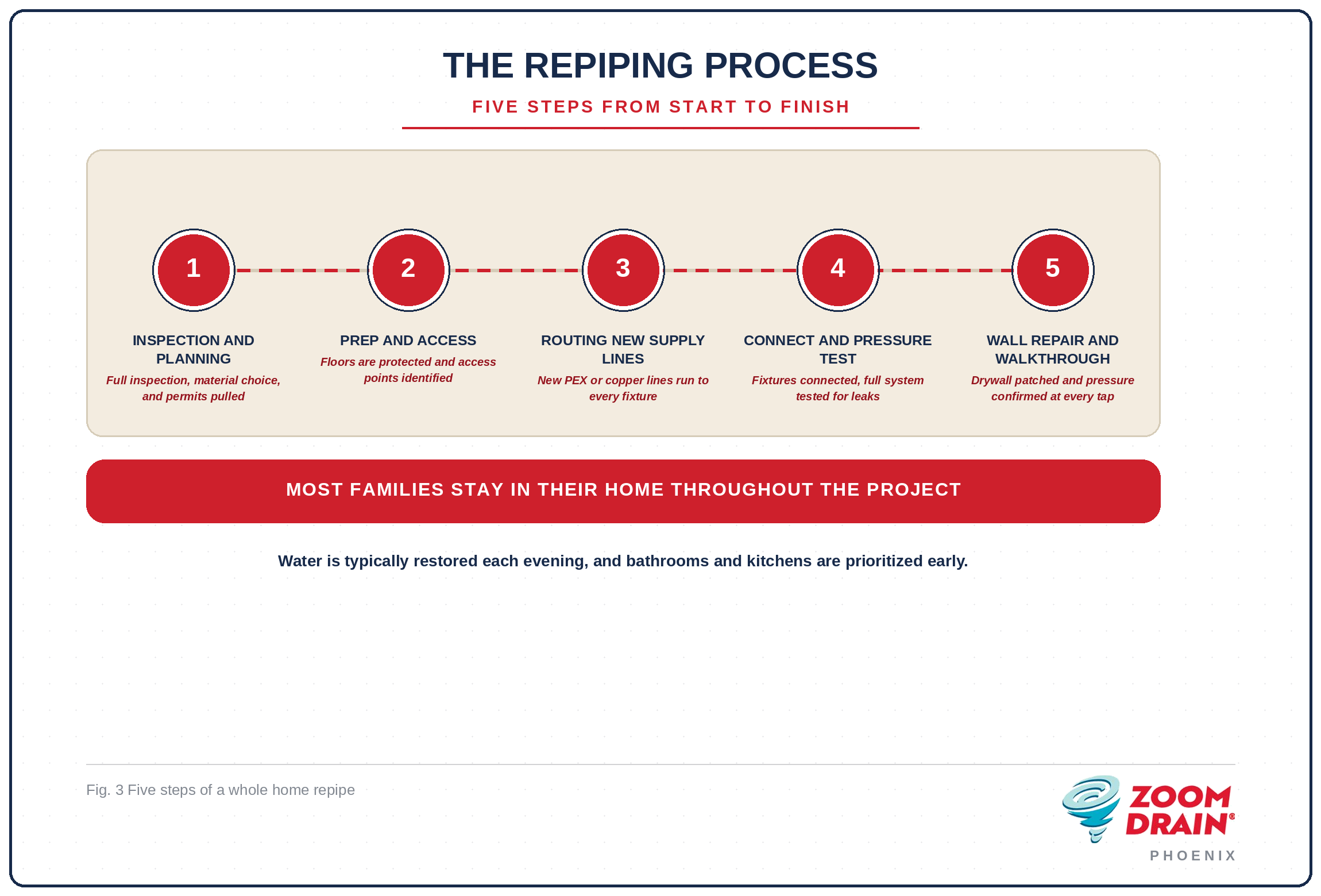
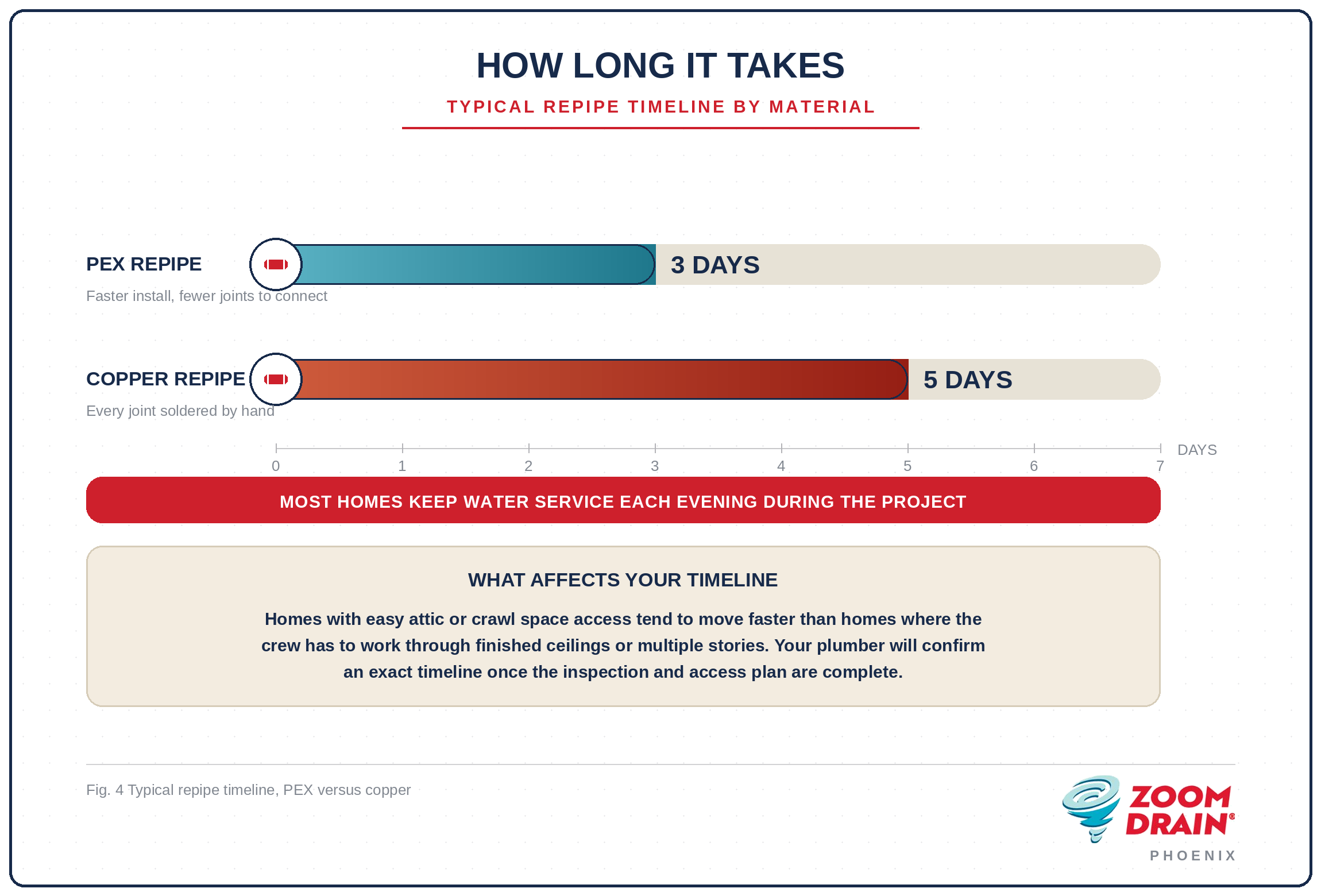
Timeline depends heavily on the material chosen and the size of the home. A typical PEX repipe for an average size home is often completed in two to three days, while the same scope of work in copper generally takes four to five days because of the additional time needed to solder every joint by hand. Homes with easy attic or crawl space access tend to move faster than homes where the crew has to work through finished ceilings or multiple stories. On most projects, water is shut off only during working hours and restored again each evening, which means most families are able to continue living in the home throughout the project rather than needing to relocate.
Living through a repipe is a bigger disruption than a typical repair, but it is manageable for most households. Expect some noise during working hours, temporary water shutoffs while lines are actively being connected, and a crew moving through different areas of the home over the course of the project. Bathrooms and kitchens are typically prioritized early so that essential water access is restored as quickly as possible, even while work continues elsewhere in the home. Most homeowners find it easiest to plan around the project the way they would any other short home renovation, keeping valuables clear of work areas and coordinating with the crew on which rooms need access each day.
Pets are worth planning around as well, since open access points and a crew moving in and out of the home throughout the day are not ideal conditions for animals used to a quiet house. Many homeowners find it easiest to keep pets in a closed off room or with a family member for the first day or two of the project, then reintroduce them once the crew has settled into a routine.
Hard water throughout the Phoenix Valley accelerates corrosion and mineral buildup inside older metal pipe faster than in many other parts of the country. Combine that with a large number of homes built decades ago with original galvanized supply lines, and it is common for local plumbers to see corrosion related failures well before the sixty year mark that galvanized pipe can theoretically reach in milder water conditions. Homes with original plumbing from the 1960s through the 1980s are especially worth having inspected proactively rather than waiting for a leak to force the issue.
Repiping is a significant investment, and choosing the right team matters as much as choosing the right material. Zoom Drain Phoenix technicians start every project with a thorough inspection and a clear, upfront flat rate quote before any walls are opened, so homeowners know the full cost and timeline in advance. Our crews work efficiently to minimize disruption, prioritize restoring water access to key rooms early in the project, and stand behind the finished work with a full pressure test and walkthrough before calling the job complete.
How do I know if I need a full repipe or just a repair?
A single isolated leak or issue at one fixture is often a straightforward repair. Multiple leaks, system wide low pressure, or discolored water from several taps at once usually point toward a broader problem that a repipe solves more permanently than repeated individual repairs.
Will I need to move out of my home during a repipe?
Most homeowners are able to stay in their home throughout the project, since water is typically restored each evening and key rooms like bathrooms are prioritized early. Larger or more complex homes may require some added flexibility, which your plumber will walk through during the planning phase.
Is PEX pipe safe for drinking water?
Yes. PEX has been extensively tested and is approved for potable water use in residential plumbing throughout the country, and it is the material most commonly chosen for modern repipes because of its safety, flexibility, and performance.
How much of my home's drywall will need to be opened during a repipe?
This varies by home layout and access, but experienced crews plan the route to minimize the number of cuts needed, often relying on attic or crawl space access wherever possible. Any drywall that is opened is patched and left ready for paint before the project is finished.
If your home is showing signs of failing pipe, whole home repiping itself isn't something Zoom Drain Phoenix installs, but if a damaged sewer line is part of the picture, that's our specialty. We offer thorough camera inspections and clear, upfront flat rate quotes for sewer repair and replacement. Call us today at (602) 613-1114 for fast, flat rate service across the Phoenix metro.