Written by
Zoom Drain Phoenix Team
Published on
August 10, 2026

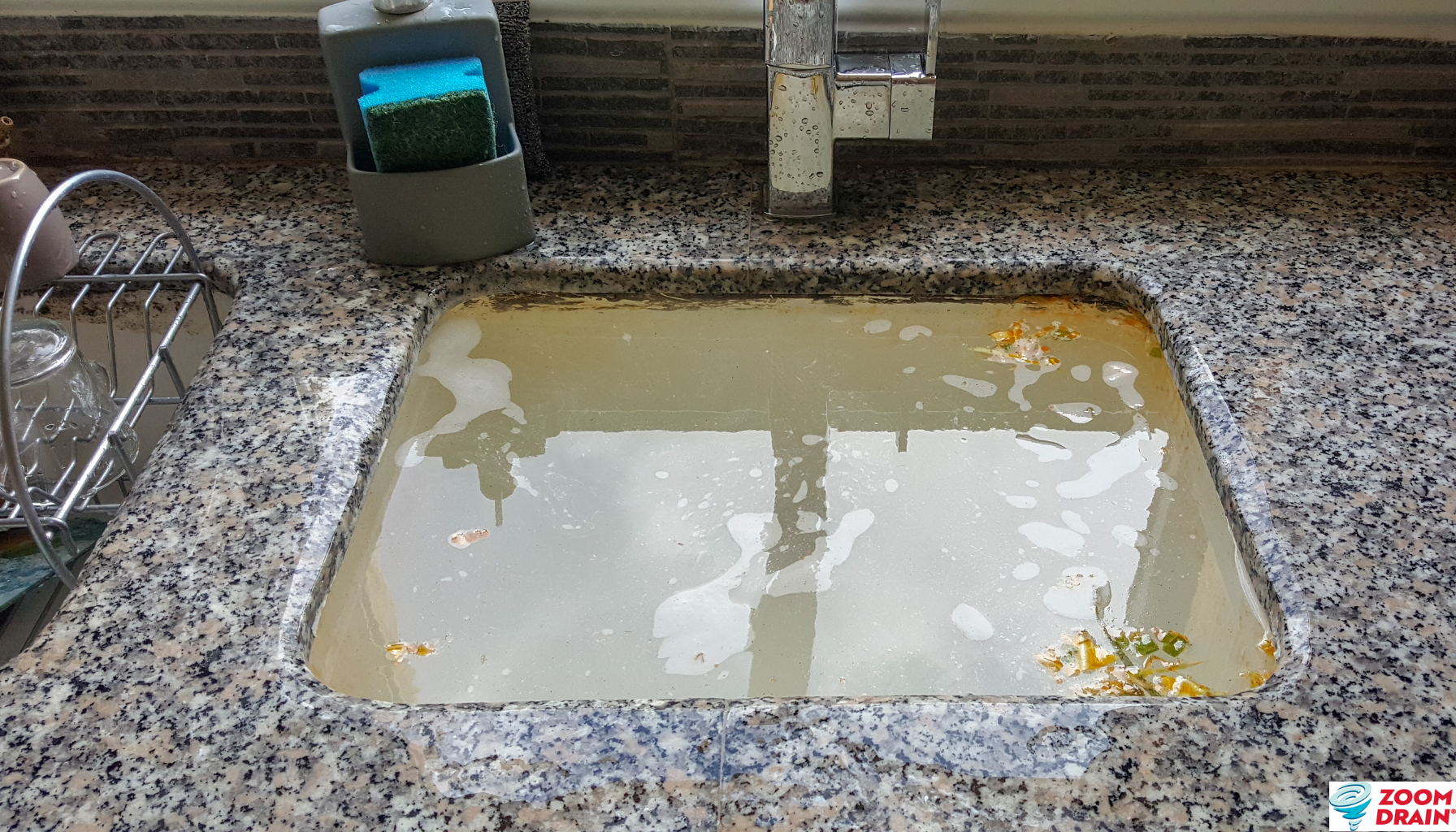
If you've plunged the same shower drain three times this year, you already know the frustration: a clog clears, life goes back to normal, and a few weeks later the water is standing at your ankles again. Recurring clogs are rarely bad luck, and they're rarely random either. They're almost always a symptom of something specific to how Phoenix homes are built, plumbed, and watered, and that something tends to repeat itself until it's actually addressed at the source.
At Zoom Drain Phoenix, recurring clog calls are some of the most common we get, and there's usually a pattern behind them. This guide breaks down the real, valley-specific causes behind repeat clogs, so you know what you're actually dealing with before calling anyone out. Ready to get to the bottom of it? Call us at (602) 613-1114 or book your service online for a flat-rate diagnostic visit.
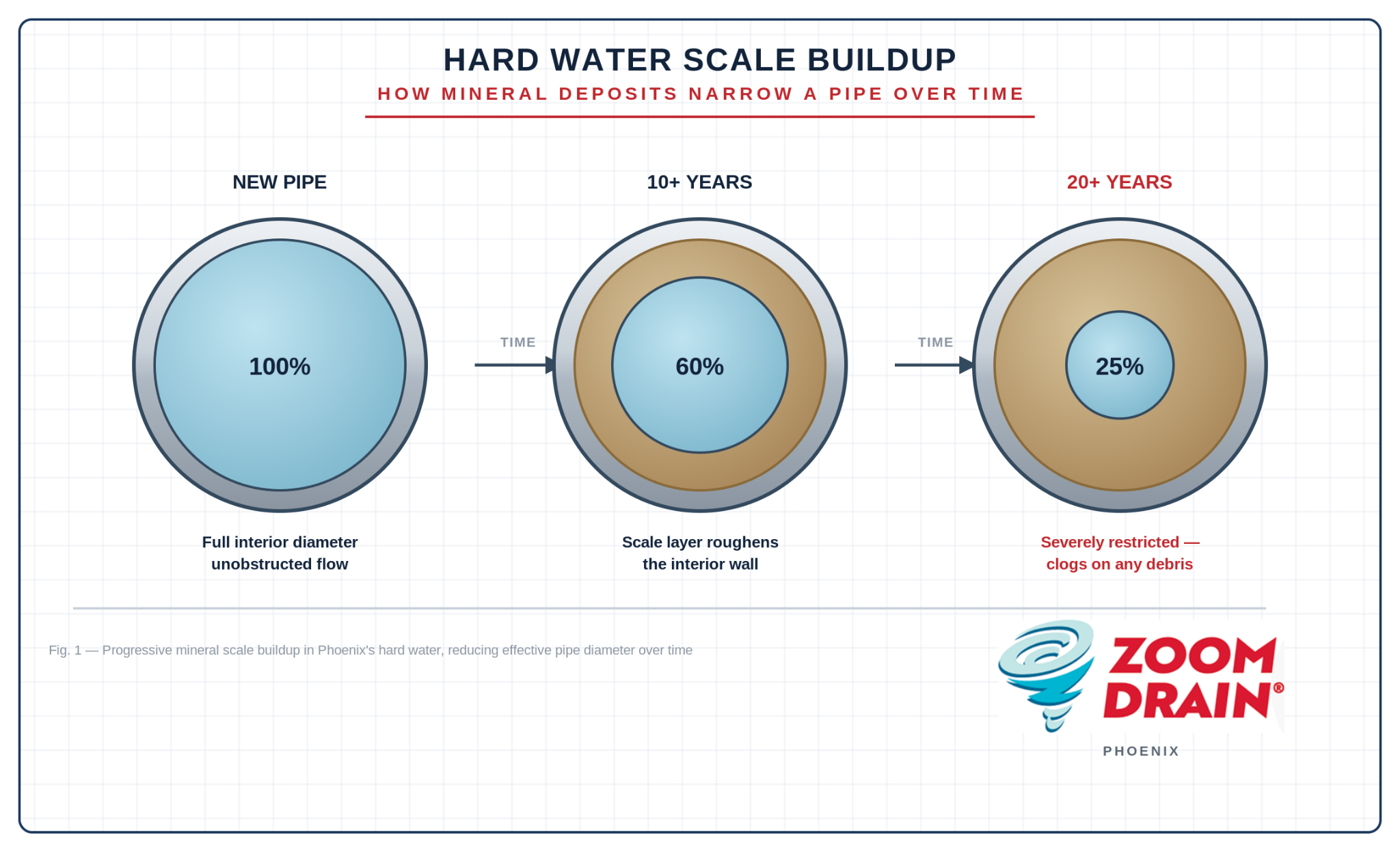
Phoenix water is famously hard. Most homes across the valley test between 16 and 22 grains per gallon, well above the 7 grains per gallon threshold that defines "very hard" water. Every gallon that runs through your pipes leaves behind a trace of calcium and magnesium, and over years that trace becomes a scale layer coating the inside of the pipe wall.
Scale buildup doesn't just narrow the pipe. It also roughens the interior surface, giving grease, hair, and soap residue something to grip onto instead of washing straight through. A pipe that used to have a smooth two-inch interior can effectively shrink to the width of a garden hose long before anyone notices a full blockage.
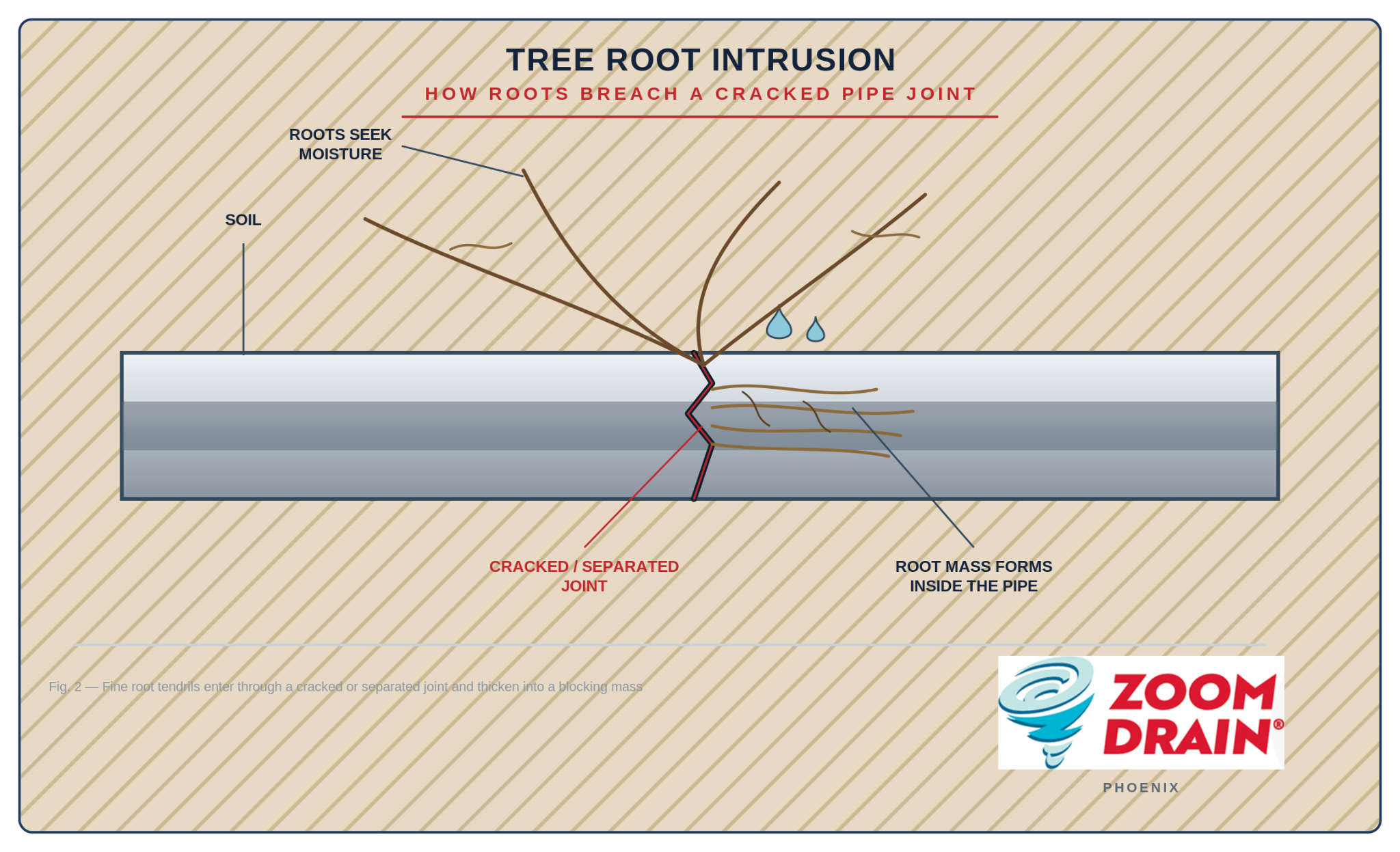
Phoenix's older, established neighborhoods, including areas like Arcadia, Willo, and Coronado, are known for mature ficus, citrus, and mesquite trees, and those same trees are notorious for aggressive root systems. Roots don't attack a pipe directly. They're drawn toward the moisture and warmth escaping through a hairline crack or a slightly separated joint, and once a fine root thread finds its way in, it thickens over time until it fills the pipe.
Root intrusion is progressive. What starts as a few thin tendrils at a joint can, within a couple of years, become a dense mat that traps toilet paper and waste behind it, turning an occasional slow drain into a full backup.
A large share of Phoenix's housing stock was built before 1990, and many of those homes still run on their original clay or cast iron sewer laterals. Clay pipe was laid in short sections with a joint every few feet, and every joint is a potential entry point for roots and a potential spot for misalignment as the ground shifts. Cast iron, meanwhile, corrodes from the inside out in a process called tuberculation, where rust builds into a rough, jagged crust that catches debris much like scale does.
Neither material was built with a 60-plus year lifespan in mind. If your home falls into this era and you've never had the line inspected, recurring clogs may simply be the pipe reaching the end of its usable life joint by joint. A camera inspection is usually the only way to tell the difference between a pipe that just needs cleaning and one that's quietly failing from the inside out.
Not every recurring clog is a structural issue. Plenty come down to habits in the kitchen and bathroom that have nothing to do with pipe age, tree roots, or water hardness, and the fix is often as simple as changing what goes down the drain in the first place:
Arizona's caliche soil, a dense, clay-like layer common across the valley, expands and contracts with moisture. During monsoon season, sudden heavy rain saturates the ground around a sewer lateral, and that swelling and settling can shift a pipe just enough to create a low spot, known as a belly, or to separate a joint that had been holding steady for years. Once a belly forms, standing water and waste collect there permanently, and no amount of home remedies will fix it since the pipe itself is out of alignment.
This is also why some homeowners notice their clogs get dramatically worse for a few weeks every summer and then seem to calm down again. The soil movement is seasonal, but once a pipe has shifted out of alignment, it doesn't shift back on its own.
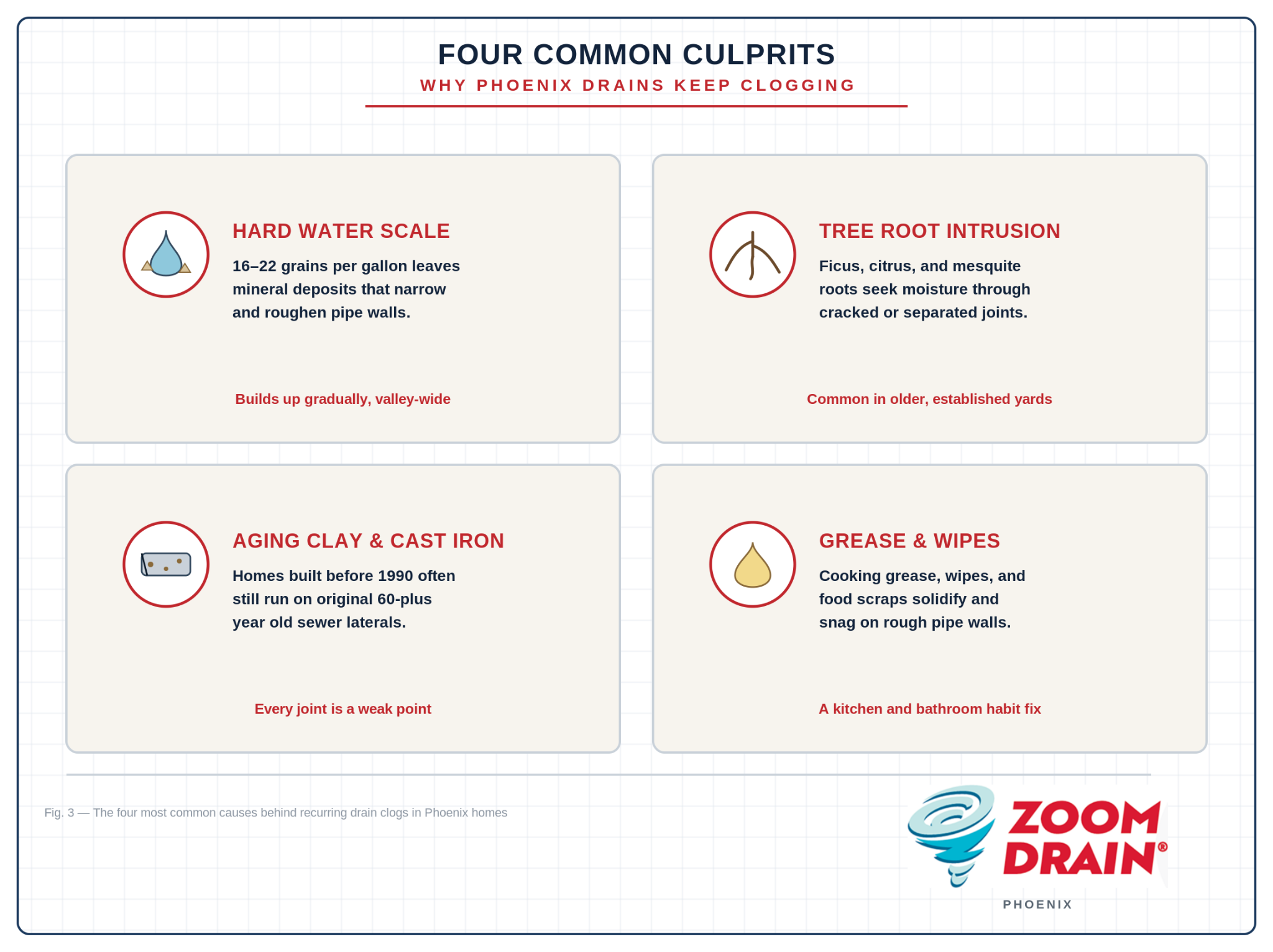
Common Clog Causes at a Glance
Recurring clogs waste time and money when they're treated as a one-off instead of a pattern. Every visit that only clears the symptom and skips the cause is a visit you'll likely pay for again in a few months. Our licensed technicians look past the immediate blockage to find out why it keeps happening, using the same equipment every time:
A clog that keeps returning is your plumbing system telling you something specific. The sooner that message gets read correctly, the less it costs to fix.
If the same drain in your home keeps backing up no matter what you try, it's worth finding out why instead of clearing it again and waiting for next time. Contact Zoom Drain Phoenix today at (602) 613-1114 or book your service online for a flat-rate camera inspection and a clear answer about what's really going on underground.