Written by
Zoom Drain Phoenix Team
Published on
August 10, 2026


A sewage smell drifting through the bathroom is one of those problems that is easy to notice and hard to ignore, especially once it starts showing up more than once. The good news is that the cause is almost always one of a small handful of common issues, and most of them can be narrowed down with a few quick checks before you ever need to call a professional. The less good news is that a lingering sewer smell should never be brushed off, since it is your plumbing system's way of telling you that something meant to stay sealed no longer is.
Every drain in your home, whether it serves a sink, tub, shower, or floor drain, connects to the same shared sewer system that carries waste away from the house. To keep the smell of that system from drifting back up into your living space, plumbing codes require a water seal called a P trap under every fixture, along with a vent stack that lets sewer gas escape safely through the roof instead of through your bathroom. When either of those safeguards fails, even briefly, gas finds its way back into the room.
Because a modern bathroom actually depends on several different seals and vents working correctly at once, a sewage smell can come from more places than people expect. Some causes are as simple as a drain that has not been used in a while. Others point to a real problem further down the line that benefits from a professional look before it gets worse.
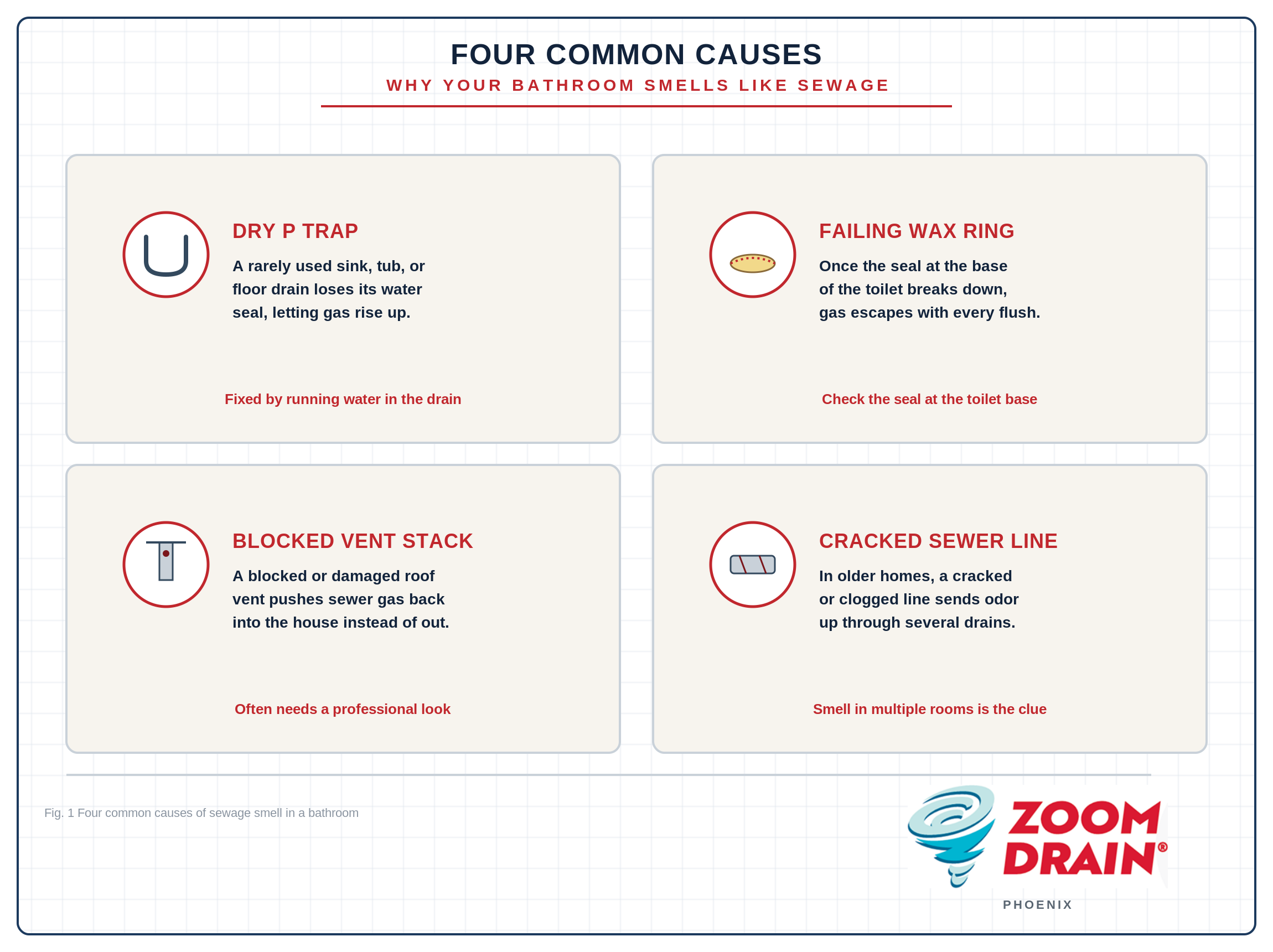
By far the most frequent cause of bathroom sewage smell is a dry P trap. Every sink, tub, shower, and floor drain has a curved section of pipe designed to hold a small amount of water at all times. That standing water acts as a physical barrier, blocking sewer gas from rising up through the drain and into the room. It works quietly and automatically every time you use the fixture normally.
The problem shows up when a drain sits unused for an extended stretch, which is common with guest bathroom sinks, rarely used tubs, or floor drains in a laundry room or garage. Without regular water flowing through, the water in the trap slowly evaporates. Once it is gone, there is nothing left to block the gas, and it rises straight into the room. This is also one of the easiest problems to fix. Running water in the affected drain for thirty seconds to a minute refills the trap and typically resolves the smell within minutes.
The second most common cause is a wax ring that has failed at the base of the toilet. When a toilet is installed, a wax ring creates an airtight seal between the base of the fixture and the drain flange in the floor. Over years of use, temperature changes, minor shifting, or a toilet that was not perfectly secured during installation, that wax seal can compress, crack, or shift out of place.
Once the seal is compromised, sewer gas can escape with every flush, and in more serious cases, water can leak out around the base of the toilet as well. A telltale sign of a failing wax ring is a smell that seems to intensify right after flushing, or a toilet that rocks slightly when you put weight on it. Because replacing a wax ring involves removing the toilet entirely, this is a repair most homeowners choose to have handled by a professional rather than attempting themselves.
Every home's plumbing system includes a vent stack, typically a pipe that runs up through the roof, whose entire job is to let sewer gas escape outside rather than backing up into the house. When that vent becomes blocked by debris, a bird's nest, or even ice in colder climates, or when it becomes physically damaged, gas that would normally vent outdoors gets pushed back down into the plumbing system and out through the path of least resistance, which is often a bathroom drain.
Vent stack issues are trickier to diagnose from inside the house, since the blockage is usually on the roof and not something most homeowners can safely inspect themselves. If you have already ruled out a dry trap and a failing wax ring, a blocked vent stack becomes a likely suspect, particularly if the smell seems to worsen on hot days or after it rains.
The most serious cause, and the one most likely to require significant repair work, is damage further down the main sewer line itself. In older homes, particularly those with original clay or cast iron piping, joints can separate, pipes can crack, and tree roots can intrude into the line over time. When that happens, sewage backs up or vents improperly, and the smell can show up in multiple rooms at once rather than staying isolated to a single fixture.
This is the scenario where a camera inspection becomes essential. Unlike a dry trap or a wax ring, a damaged sewer line is not something you can see or fix from inside the bathroom, and guessing at the cause often wastes time and money on repairs that do not address the real problem.
Before calling in a professional, a few simple checks can help you understand what you are dealing with. Start by running water in every drain in the bathroom, including ones you rarely use, for about a minute each. This refills any P traps that may have gone dry and is often enough to resolve the smell entirely.
Next, take a close look at the base of the toilet. Check for any movement when you gently rock it, any visible cracking in the caulk line around the base, or any odor that seems to intensify specifically near the floor around the toilet rather than elsewhere in the room. If the toilet feels loose or the smell is clearly strongest there, a wax ring issue becomes the likely explanation.
Pay attention to where and when the smell shows up. A smell isolated to one bathroom, especially one that improves after running water in the drains, usually points to a simple, local fix. A smell that shows up in multiple rooms, that returns even after checking traps and the toilet seal, or that comes with gurgling sounds from your drains, points toward something further along the system that is worth a professional diagnosis.
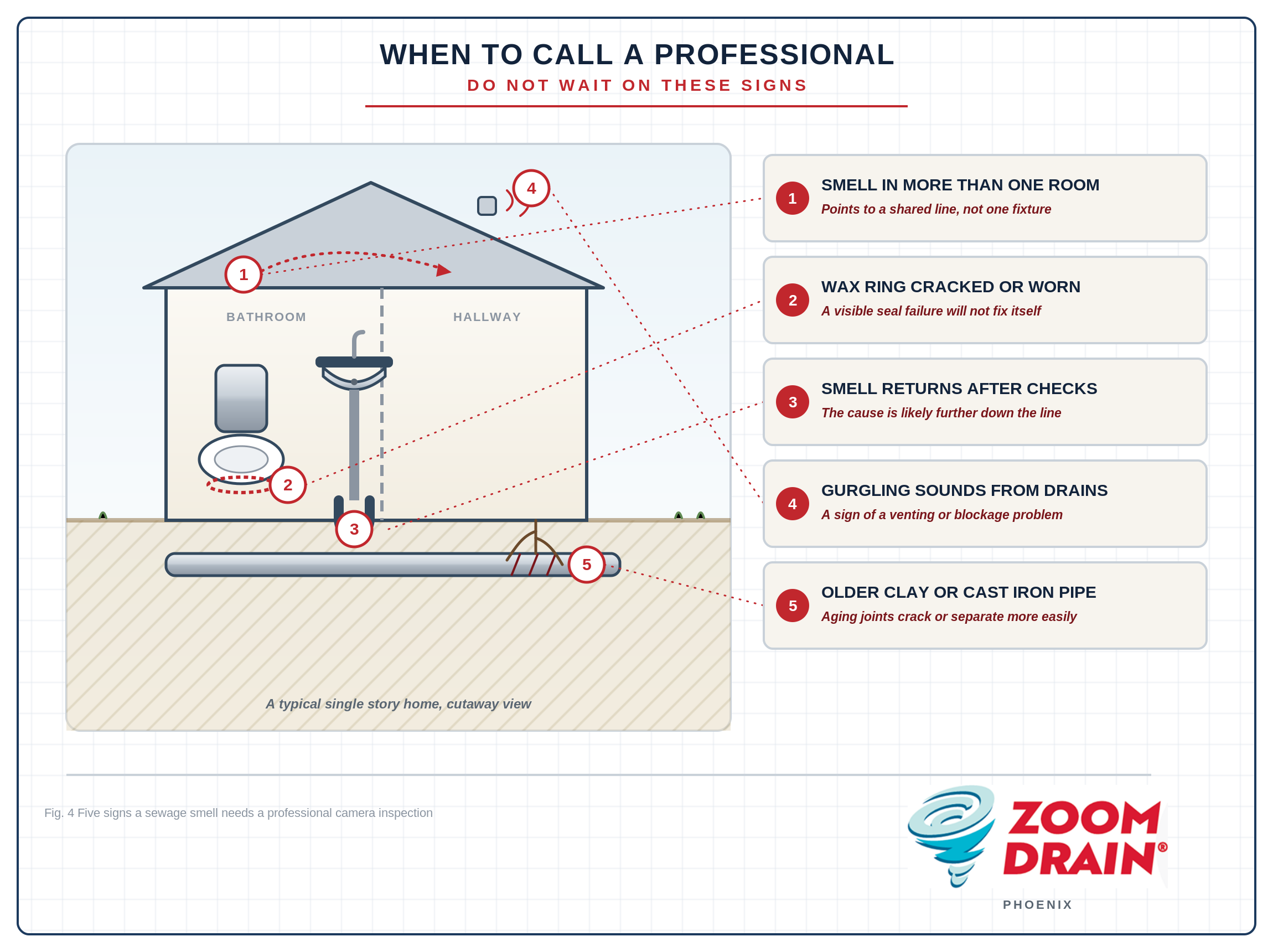
Certain signs mean it is time to stop troubleshooting and call for help. A smell that shows up in more than one room at once suggests a shared line problem rather than an issue with a single fixture. A wax ring that looks visibly cracked, worn, or that lets the toilet rock at all should be replaced rather than left in place. A smell that keeps returning even after you have run water in every drain and checked the toilet seal usually means the real cause is further down the line. Gurgling sounds coming from drains, especially when another fixture is used, often signal a venting or partial blockage problem. And if your home is older and still runs on original clay or cast iron sewer pipe, those aging joints are simply more likely to crack or separate over time, making a preventive camera inspection a smart move even before symptoms get worse.
Is sewer gas actually dangerous to breathe? In small, brief amounts it is mostly just unpleasant, but sewer gas can contain methane and hydrogen sulfide, and prolonged exposure in an enclosed space can cause headaches, nausea, or worse. A persistent smell should be treated as a real problem to solve, not just an odor to live with.
Why does the smell only show up sometimes? Intermittent smells often point to a P trap that is close to drying out rather than fully dry, or a vent stack issue that is affected by weather, wind direction, or temperature. A smell that comes and goes is still worth investigating rather than waiting for it to become constant.
Can I fix a failing wax ring myself? Technically yes, but it requires disconnecting and lifting the toilet, which is heavy, awkward, and easy to get wrong if the flange underneath is also damaged. Most homeowners find it is worth having a professional handle this repair correctly the first time.
How quickly can Zoom Drain Phoenix diagnose the source? In most cases, our technicians can identify the cause during the same visit using camera inspection equipment, without any guesswork or exploratory digging.
When you call Zoom Drain Phoenix for a sewage smell that has not resolved on its own, the process starts with a conversation about what you have already noticed, including where the smell shows up and whether it comes and goes. From there, our technicians can run a camera down through the affected line to see exactly what is happening inside the pipe, whether that is a cracked joint, a root intrusion, or simply confirmation that the line itself is clear and the issue is isolated to a single fixture like a wax ring or vent.
Because we bring the diagnostic equipment with us, most sewage odor calls can be fully diagnosed and, in many cases, resolved in a single visit. If the camera reveals a larger issue like a damaged sewer line, we walk you through the findings, show you what we saw, and explain your repair options clearly before any work begins.
Phoenix has a few local quirks worth mentioning. Many homes here are built on a concrete slab foundation, which means the sewer line runs directly beneath the floor rather than through an accessible crawlspace. That makes a camera inspection especially valuable, since it lets a technician see exactly where a problem sits without cutting into the slab to search for it blindly. Our long dry stretches followed by sudden monsoon downpours can also stress older pipe joints, causing soil to shift quickly after months of staying still, which is part of why sewage smell calls tend to tick up during and after monsoon season.
A little routine attention goes a long way toward avoiding sewage odors altogether. Running water briefly in guest bathrooms, laundry room floor drains, and any other infrequently used fixtures once every few weeks keeps their P traps filled and functioning as designed. Periodically checking the caulk seal and stability of your toilets, especially older installations, can catch a failing wax ring before it becomes a bigger mess. And if your home has original clay or cast iron sewer piping, scheduling a camera inspection every few years can catch root intrusion or joint separation early, often turning what would have been an emergency repair into a small, planned fix.
A sewage smell in the bathroom is unpleasant, but it is also very solvable once you know where to look. Zoom Drain Phoenix technicians handle these calls every day across the Phoenix area, and our camera inspection technology means we rarely have to guess. Instead of trial and error repairs, we trace the smell to its exact source the first time, saving you both money and the frustration of a problem that keeps coming back.
We offer fast, flat rate pricing so you know the cost before any work begins, along with same day appointments for situations that cannot wait. Whether the fix turns out to be as simple as running water in a forgotten drain or as involved as repairing a section of sewer line, our team will walk you through exactly what we find and what it will take to resolve it for good. Call Zoom Drain Phoenix today at (602) 613 1114 or book online for fast, flat rate service across Phoenix.