Written by
Zoom Drain Phoenix Team
Published on
August 10, 2026


Opening a water bill that is double or triple what you normally pay is alarming, and the first instinct for most homeowners is to wonder whether the meter itself is wrong. In the vast majority of cases, though, a sudden spike points to water actually being used or lost somewhere in your home, whether that is a running toilet, a dripping fixture, or a hidden leak in a supply line. The good news is that most causes are identifiable with a little detective work, and the ones that are not obvious to the eye can be confirmed quickly with professional leak detection.
Before chasing any specific cause, the single most useful test you can run is a simple water meter check. Locate your water meter, usually found near the curb in a small in ground box, and make sure every fixture and appliance in your home is completely off, including ice makers, irrigation timers, and pool auto fill systems. Note the exact reading, wait fifteen to thirty minutes without using any water, and check the reading again. If the number has moved, or if your meter has a small leak indicator dial that is spinning, water is flowing somewhere in your system even though nothing should be on.
This test does not tell you where the water is going, but it does confirm whether you are dealing with an actual leak versus simply higher household usage, which matters for deciding your next step. It only takes a few minutes, costs nothing, and is worth doing before you spend time chasing any single suspected cause, since it immediately narrows the problem down to either an active leak or a genuine increase in usage.
A running toilet is, by a wide margin, the most common cause of an unexpectedly high water bill, and it is also one of the easiest to miss, since a toilet that is leaking internally often makes no obvious sound. Water can silently leak from the tank into the bowl through a worn flapper valve, continuously refilling the tank and running up your usage without ever overflowing or making noise.
A simple way to test for this is the dye test. Add a few drops of food coloring to the tank, wait about ten minutes without flushing, and then check the bowl. If color has appeared in the bowl, water is leaking past the flapper. A single running toilet can waste anywhere from a couple hundred to several thousand gallons a month depending on how badly the flapper is worn, which is more than enough to explain a dramatic jump in your bill.
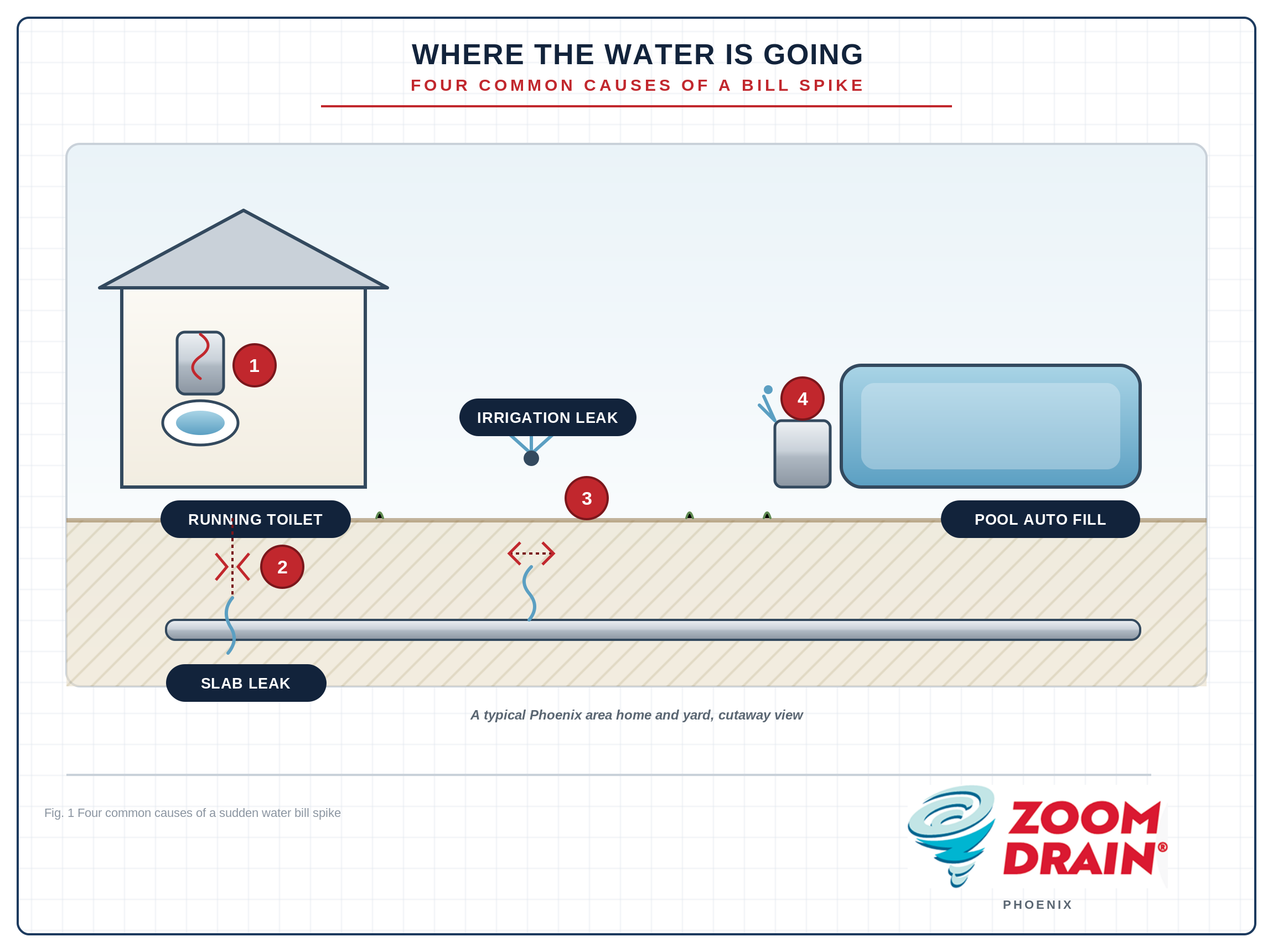
For homes with an irrigation system, a broken line, a stuck valve, or a cracked sprinkler head is another frequent culprit, particularly since these systems run automatically and a problem can go unnoticed for weeks. A valve that fails to fully close will continue trickling water even when the system is not actively running a cycle, and a cracked underground line can lose significant water without ever creating an obvious puddle if the soil absorbs it quickly.
Walking your yard during and shortly after a scheduled watering cycle, looking for unusually soggy areas, weak or missing spray from individual heads, or water pooling somewhere it should not be, can help catch this type of leak early.
Homes with a pool that has an automatic fill system are prone to a specific and often overlooked cause of high water bills. If the auto fill valve sticks open or the float is not properly calibrated, the system can continuously add water to the pool well past the point of actually needing it, sometimes running for days before anyone notices. Checking that your pool water level is holding steady rather than staying unusually high, and confirming the auto fill mechanism shuts off properly, can rule this out quickly.
A leak in a water line running beneath your home's concrete foundation is one of the more serious causes of a sudden bill increase, since a pressurized line leak continues wasting water around the clock until it is repaired. Slab leaks are especially common in Arizona due to hard water related pipe corrosion, shifting desert soil, and the wear that comes from constant hot and cold pipe expansion over the years.
Because a slab leak is hidden beneath the foundation, it typically will not be visible the way a dripping faucet is. Instead, watch for secondary signs like a warm spot on an otherwise cool floor, the sound of running water when everything is off, or dampness in flooring or carpet in one specific area of the home.
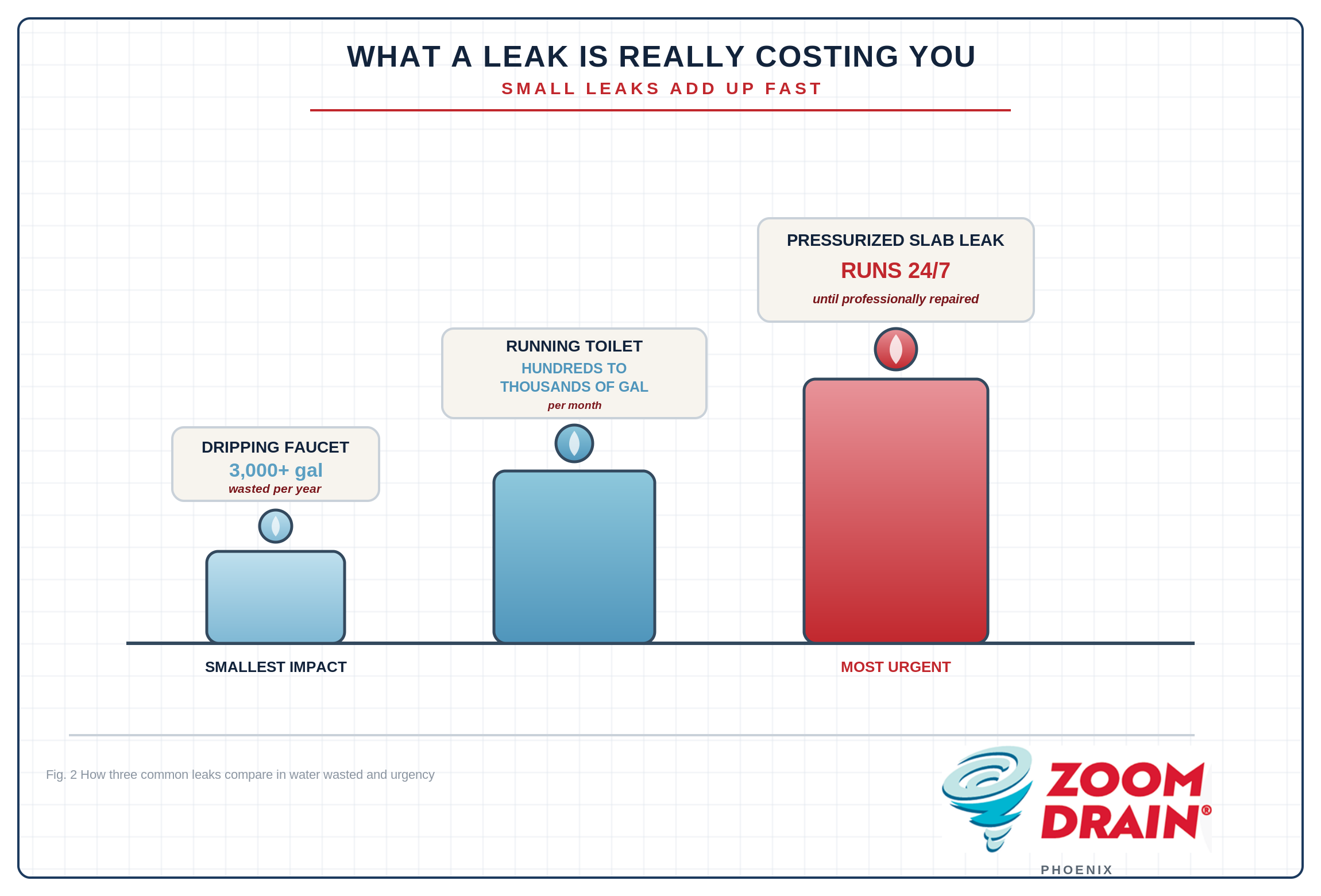
While less dramatic than a slab leak or a stuck irrigation valve, a collection of small drips around the house adds up faster than most people expect. A faucet dripping once per second can waste well over three thousand gallons in a year on its own, and a home with several minor drips across different fixtures can meaningfully move the needle on a monthly bill. Similarly, a water softener stuck in a regeneration cycle, an ice maker line with a slow leak, or a water heater with a leaking valve can each quietly run up usage without an obvious visible sign.
Not every spike has a leak behind it. Arizona's hot, dry summers naturally increase outdoor watering needs, whether for landscaping, a garden, or simply keeping a lawn alive through triple digit heat, and that seasonal shift alone can meaningfully raise a bill compared to cooler months. A change in household size, guests staying for an extended visit, or a new appliance like a second washing machine can also explain a jump that has nothing to do with a leak at all. Comparing your current bill to the same month last year, rather than to last month, often gives a clearer picture of whether an increase is seasonal or genuinely unusual.
It is easy to underestimate how much a small, continuous leak adds up to over the course of a billing cycle. A running toilet losing water at a moderate rate can waste several hundred gallons a day, which across a full month can easily add hundreds of dollars to a bill depending on local water rates. A slab leak on a pressurized line is often worse, since it runs continuously around the clock rather than only during specific fixture use, and can also lead to costly secondary damage to flooring, drywall, or the foundation itself the longer it goes unaddressed. Framed against the cost of a professional leak detection visit, which is typically far less than even a single inflated billing cycle, tracking down the source quickly is almost always the more affordable choice in the long run.
Working through possible causes in order of likelihood saves time and helps you avoid unnecessary repairs. Start with the meter test described earlier to confirm whether water is actively flowing when nothing should be on. If the meter confirms a leak, run the toilet dye test on every toilet in the home, since this is the most common and easiest cause to rule in or out. Next, check any pool auto fill system and walk your irrigation zones during a watering cycle looking for obvious signs of trouble.
If none of these checks reveal an answer but the meter test still shows water moving, the leak is likely hidden, whether that is underground in an irrigation line, inside a wall, or beneath the slab, and this is the point where professional leak detection becomes the fastest and most cost effective path forward.
When a leak is not visible or identifiable through basic checks, Zoom Drain Phoenix technicians use electronic listening equipment and, when appropriate, thermal imaging to pinpoint exactly where water is escaping without any guesswork or unnecessary digging. This matters because opening up a wall or cutting into a slab based on a guess can turn a straightforward repair into an expensive, messy project that still might not find the actual leak.
Once the source is identified, we walk you through your repair options and provide an upfront flat rate quote before any repair work begins, so you know the full cost and scope ahead of time.
Could my water bill be high because of a meter reading error rather than a leak?
It happens occasionally, but it is far less common than an actual leak or usage increase. If your own meter test at home shows no movement while everything is off, it is worth contacting your water utility to ask about your recent readings before assuming a plumbing problem.
How much water can a running toilet actually waste?
A significantly worn flapper can waste hundreds of gallons per day in extreme cases, which is more than enough on its own to double or triple a typical monthly bill.
Is a high water bill always a sign of a leak?
No. Seasonal irrigation increases, houseguests, filling a pool, or a new appliance can all raise usage without any leak being present. Comparing bills year over year for the same month helps separate normal seasonal change from a genuine problem.
How quickly should I act on a suspected leak?
As soon as possible. A pressurized leak, whether in a slab, a wall, or an irrigation line, continues wasting water and can cause additional damage the longer it goes unaddressed.
What if I have checked everything and still cannot find the cause?
This is exactly when professional leak detection earns its cost. Hidden leaks in walls, under slabs, or in underground irrigation lines are often impossible to confirm through visual inspection alone, and electronic detection equipment can pinpoint the source in a fraction of the time it would take to search manually.
A few regular habits make it much easier to catch a problem before it turns into an expensive surprise. Reading your water meter once a month, even without a suspected leak, builds a baseline so an unusual jump stands out immediately rather than blending into a bill you only skim. Testing your toilets for silent leaks every few months, since flappers wear out gradually and often show no outward sign of failure, catches the single most common cause before it has a chance to run up a full billing cycle. Walking your irrigation zones periodically during an active watering cycle, especially at the start of the hot season when systems are used most heavily, helps catch a failing valve or cracked line early. And if your home has copper piping installed several decades ago, being aware that slab leaks become more likely with age means a sudden bill spike is worth taking seriously rather than dismissing as a fluke.
A sudden spike in your water bill is frustrating, but it is almost always solvable once the source is identified. Zoom Drain Phoenix technicians help Phoenix area homeowners track down everything from a simple running toilet to a hidden slab leak, using precise detection tools rather than guesswork, backed by upfront flat rate pricing so you know the cost before any work begins.
If you have already checked the obvious causes and your bill is still unexplained, our team can find the source quickly and walk you through exactly what it will take to fix it, so you can stop guessing and start saving. Call Zoom Drain Phoenix today at (602) 613 1114 or book your leak inspection online for fast, flat rate service across the greater Phoenix area.