Why Water Heater Installation Should Be Left to a Licensed Plumber

A water heater looks simple to install, but the job involves gas or electrical connections, pressurized lines, proper venting, and permits most homeowners never realize Arizona requires. This guide covers what installation involves, the risks of DIY, and why a licensed plumber protects your home and budget.
Written by
Zoom Drain Phoenix Team
Published on
August 10, 2026

A water heater looks simple from the outside: a tank, a couple of pipes, and a temperature dial. That simplicity is exactly why so many homeowners assume they can swap one out themselves over a weekend. In practice, a water heater installation touches gas or electrical connections, pressurized water lines, venting, and safety devices that all have to work together correctly the first time.

This guide walks through what installation actually involves, the permits Arizona requires, the safety risks of doing it yourself, and why a licensed plumber typically saves you money rather than costing you more. If you need a new water heater installed correctly, call Zoom Drain Phoenix at (602) 613 1114 or book online.

What Installing a Water Heater Actually Involves

Installing a water heater is not just lifting a new unit into place. The job includes shutting off and draining the old system, disconnecting gas or electrical lines safely, and setting the new unit level and properly supported.

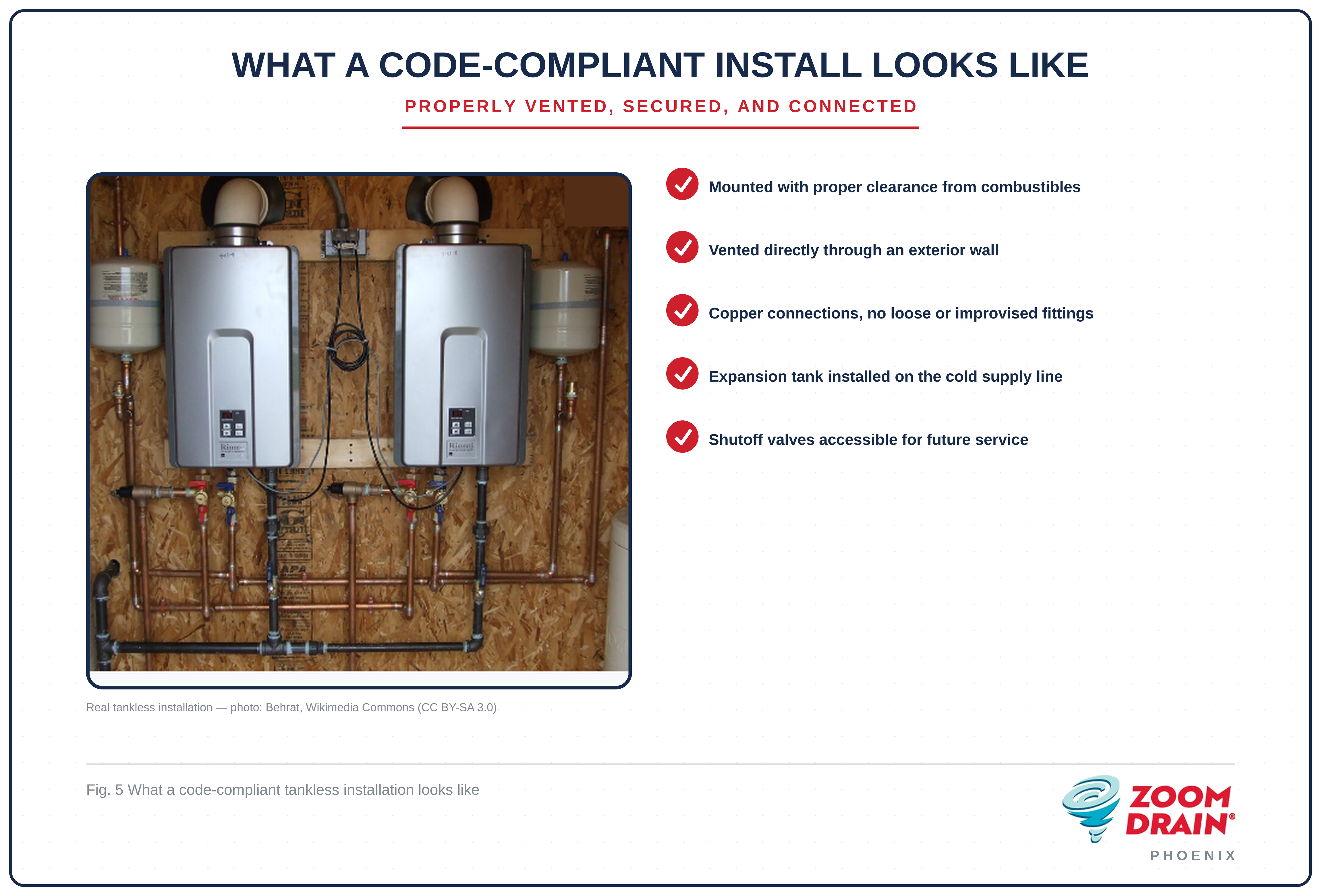
From there, a technician connects the water lines, installs a temperature and pressure relief valve with a proper discharge pipe, and adds an expansion tank if your home has a closed plumbing system. Gas units also need correctly sized venting and a combustion air supply, while electric units need a dedicated circuit that meets current code.

Every one of these steps has a right way to do it and a handful of wrong ways that are not obvious until something fails months later.

The Permits Most Homeowners Do Not Know They Need

Arizona requires a permit for water heater installation or replacement, even a straightforward swap of one tank for another. The permit triggers an inspection, which confirms the work meets current code rather than just resembling the old setup.

What is required depends on exactly what kind of installation you are doing. A same-for-same tank replacement generally needs a plumbing permit and must meet current code, including the relief valve, discharge pipe, a drain pan where required, and an expansion tank if your system is closed. Switching from a standard tank to a tankless gas unit typically requires both plumbing and gas permits, since the existing gas line is often undersized for the new unit's demand. Installing a heat pump water heater adds an electrical permit on top of plumbing. Relocating a water heater to a new part of the home can require the full stack: plumbing, gas, and electrical.

Only a licensed contractor can legally pull most of these permits, which is one of the more overlooked reasons DIY installation runs into trouble before the work even starts.

Permit Requirements by Installation Type

Permit Requirements by Installation Type
Installation Type Permits Typically Required
Same-for-same tank replacement Plumbing
Tank to tankless gas conversion Plumbing and gas
Heat pump water heater Plumbing and electrical
Relocating the unit Plumbing, gas, and electrical as applicable

The Safety Risks of a DIY Install

A water heater is not just an appliance. It is a pressurized vessel connected to either combustible gas or high voltage electrical power, and a mistake in any of those areas has consequences well beyond a leak.

Without a properly installed temperature and pressure relief valve, a tank has no way to release built up pressure, which creates a real risk of the tank rupturing. On a gas unit, incorrect venting or a loose gas connection can allow carbon monoxide to build up inside the home or create a fire hazard. Improperly connected water lines often do not fail immediately. Instead, they leak slowly for weeks or months, quietly causing water damage and mold growth long before anyone notices standing water.

None of these risks require a dramatic mistake to happen. A fitting that is a quarter turn too loose or a vent pipe with the wrong slope is often enough.

Permits by Installation Type - Why Water Heater Installation Should Be Left to a Licensed Plumber

Common Mistakes That Cost Homeowners Later

A handful of mistakes show up again and again in DIY water heater installations, and most of them are not visible until well after the job is finished.

Choosing the wrong size unit is one of the most common. An undersized water heater cannot keep up with household demand, while an oversized one wastes energy every single day it runs. Placement mistakes are just as common, with units installed too close to walls, without proper clearance, or in locations that make future service difficult. Venting problems are the most dangerous category, since they directly affect whether combustion gases safely leave the home. Loose fittings, incorrect pipe materials, and improperly set relief valves round out the list, along with setting the thermostat too high, which raises both scald risk and pressure inside the tank.

Common DIY Mistakes and Their Consequences

DIY Errors - Why Water Heater Installation Should Be Left to a Licensed Plumber

Why DIY Can Actually Cost You More

Saving the cost of labor is the main appeal of installing a water heater yourself, but that upfront saving often disappears once something goes wrong. Many manufacturers will not honor a warranty claim if the unit was not installed by a licensed professional, which turns a covered repair into an out of pocket replacement.

Unpermitted work creates a second financial risk. If a water heater related issue causes damage and your insurer discovers the installation was never permitted or inspected, the claim can be denied entirely. That risk does not go away over time. It resurfaces at the worst possible moment, whether that is a burst fitting three years later or a home inspection when you eventually sell.

Speaking of selling, unpermitted work is exactly the kind of thing a buyer's inspector flags, which can slow down a sale or force a renegotiation over a repair that was supposed to be finished years earlier.

What a Licensed Plumber Does Differently

A licensed plumber starts by sizing the unit correctly for your household, based on the number of bathrooms, typical hot water demand, and available space. From there, the permit gets pulled before work begins, which builds a code compliant inspection into the process rather than leaving it as an afterthought.

Gas connections, venting, and combustion air are sized and installed to current code, not just close enough to pass a casual glance. Electrical connections for electric or heat pump units are wired to a dedicated circuit that meets today's requirements. The relief valve, discharge pipe, and expansion tank are installed correctly the first time, since these are the components most likely to cause serious problems when skipped or installed incorrectly.

DIY vs Licensed Plumber

What to Expect From a Professional Installation

When you call Zoom Drain Phoenix for a water heater installation, the process is built to be fast without cutting corners. Most installs, whether a standard tank or a tankless unit, are completed in two to four hours, including full removal and haul away of your old water heater.

Every installation includes a full performance check once the new unit is connected, confirming proper temperature, pressure, and flow before the technician leaves. Pricing is upfront and flat rate, agreed to before any work begins, so there are no surprise charges and no pressure to upgrade to something you did not ask for.

Whether your home needs a straightforward tank replacement or a switch to a tankless system, the installation is handled by a licensed technician who pulls the correct permits and leaves the job code compliant and fully inspected.

Tank vs Tankless: Does It Change the Installation?

Switching from a tank to a tankless water heater is a bigger job than a like for like swap. Tankless units demand more gas flow in a shorter burst, which often means the existing gas line is undersized and needs to be upgraded. Venting requirements change as well, since most tankless units require a dedicated direct vent or power vent system rather than the standard flue a tank uses.

That added complexity is exactly why a tank to tankless conversion requires both plumbing and gas permits in Arizona, and why it is one of the installation types where DIY mistakes are most common and most consequential.

Tank vs Tankless Installs

Why Phoenix Homes Have a Few Extra Considerations

Many homes across the Phoenix Valley have closed plumbing systems with a pressure regulator and backflow preventer, which means an expansion tank is required by code rather than optional. Skipping it is a common DIY oversight that leaves the system without anywhere for expanding hot water to go, adding stress to every fitting in the line.

Slab foundations, common throughout the Valley, also affect where a water heater can realistically be relocated, since running new lines under or around a slab is a bigger job than it looks on paper. And hard water throughout the region accelerates mineral buildup inside a tank, which is worth factoring into both unit choice and expected maintenance from day one.

How to Vet a Plumber Before You Hire One

Not every "licensed plumber" listing online is equally reliable, so it is worth checking a few things before you agree to a quote. Confirm the company holds a current Arizona Registrar of Contractors license, and ask directly whether they pull the permit themselves as part of the job rather than leaving that step to you.

A trustworthy contractor will also give you a firm, upfront price before work begins rather than a vague estimate that changes once the job is underway. Ask what the quote includes: removal and disposal of your old unit, the permit and inspection, and a performance check once the new unit is running are all things that should come standard rather than as add-ons.

Finally, a company that has been doing this work locally for years will know the specific quirks of Phoenix area homes, from expansion tank requirements to the realities of running new lines around a slab foundation. That local experience tends to show up in fewer callbacks and fewer surprises.

Code Compliant Installs - Why Water Heater Installation Should Be Left to a Licensed Plumber

Frequently Asked Questions

Can I install a water heater myself if I get the permit first?

Pulling a permit is exactly the part most homeowners cannot do themselves in Arizona, since only a licensed contractor can typically pull the permit for major plumbing, gas, or electrical work. Attempting the installation without one leaves the work unpermitted and uninspected, even if you intended to do everything correctly.

Will my manufacturer warranty still be valid if I install it myself?

Many manufacturers require professional installation to honor a warranty claim, so a DIY install can void coverage you were counting on. It is worth checking your specific unit's warranty terms before deciding to install it yourself.

How long does a professional water heater installation take?

Most installations, tank or tankless, are completed in two to four hours, including removing and hauling away the old unit and a full performance check on the new one.

Do I need a permit for a simple same-for-same water heater swap?

Yes. Even a straightforward replacement of one tank with a similar new one requires a plumbing permit in Arizona, and the new installation must meet current code, which may differ from how the old unit was originally installed.

What is the biggest safety risk with a DIY installation?

Improper venting on a gas unit is one of the most serious risks, since it can allow carbon monoxide to build up inside the home. A missing or incorrectly installed temperature and pressure relief valve is a close second, since it removes the tank's main safeguard against dangerous pressure buildup.

Does a tankless water heater last longer than a tank if it is installed correctly?

A properly installed and maintained tankless unit often lasts close to twenty years, compared to ten to twelve years for a typical tank, though correct installation and periodic descaling matter more for reaching that lifespan than the technology itself. An incorrectly sized gas line or vent can shorten that lifespan considerably, regardless of how good the unit itself is.

Get Your Water Heater Installed the Right Way

A water heater installation only looks simple until something is connected incorrectly. Zoom Drain Phoenix installs both tank and tankless water heaters with upfront flat rate pricing, full permitting, and same day service in most cases. Call us today at (602) 613 1114 or book online for fast, professional installation across the Phoenix metro.